Imagine waking up and struggling to lift your arm just to comb your hair. Reaching a high shelf hurts. Buttoning a shirt feels difficult. Even sleeping on one side becomes uncomfortable.
This is how frozen shoulder often begins. What starts as a mild ache slowly turns into stiffness and restricted movement, making everyday tasks frustrating.
Frozen shoulder, medically called adhesive capsulitis, affects about 1 in 20 adults, most commonly between the ages of 40 and 60. The condition develops gradually and many people cannot recall any specific injury that caused it. Because the shoulder tightens over time, simple movements become painful and limited.
The reassuring part is that frozen shoulder usually improves. With proper exercises, correct movement, and patience, the shoulder can regain mobility and function. The process takes time, but recovery is expected in most cases.
In this guide, you will learn how frozen shoulder develops, the stages you will go through, which exercises help at each stage, what movements to avoid, and practical tips to reduce pain and support healing.
Understanding Frozen Shoulder: What's Happening Inside Your Shoulder?
Your shoulder joint is a ball-and-socket joint surrounded by a capsule made of connective tissue. Normally, this capsule is flexible and allows a wide range of motion.
In frozen shoulder, this capsule becomes:
- inflamed
- thickened
- tight
- stiff
Eventually the capsule shrinks and forms adhesions (tight bands), which is why movement becomes restricted.
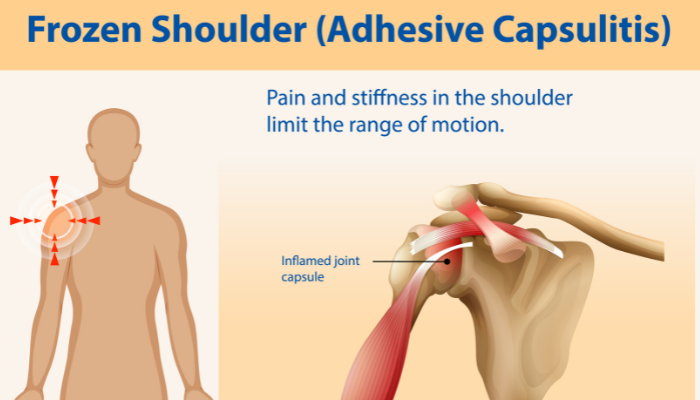
This is the key difference:
Frozen shoulder is not only painful, it physically limits movement.
Unlike muscle pain, even if someone else tries to move your arm, it won’t move normally.
Recognizing Frozen Shoulder Symptoms
Early recognition allows for earlier intervention, which generally leads to faster recovery. Watch for these warning signs:
- Dull, aching pain in the outer shoulder area that gradually worsens
- Pain radiating down your arm
- Progressive difficulty with overhead activities (combing hair, reaching shelves)
- Inability to reach behind your back (fastening clothing, tucking in shirts)
- Gradual loss of shoulder movement in all directions
- Compensatory movements where you start using your whole body to accomplish what your shoulder used to do easily
- One of the most important clues: Pain is usually worse at night than during the day.
If you experience these symptoms, especially if you're in the 40-60 age group or have risk factors like diabetes, consult a healthcare provider for proper evaluation.
The 3 Stages of Frozen Shoulder
Frozen shoulder does not stay the same. It progresses through predictable stages. Understanding these stages is extremely important because exercises change depending on the stage.
Stage 1: Freezing Stage (Painful Phase) - Approx. 2 to 9 Months
This is the stage when most people first realize something is wrong.

You initially feel a mild shoulder ache, often without any major injury. Over weeks, the pain gradually increases. The shoulder capsule (a thin tissue covering the joint) becomes inflamed and begins tightening.
During this phase:
- Pain increases week by week
- Night pain becomes severe
- Sleeping on that side becomes impossible
- Shoulder movement slowly reduces
You may notice:
- Difficulty combing hair
- Pain while wearing clothes
- Trouble reaching your back pocket
- Pain when lifting arm sideways
Why pain is worse at night
At night the shoulder remains still for long periods. The inflamed capsule stiffens, and pressure inside the joint increases, which causes intense aching pain. This is one of the most classic signs of frozen shoulder.
Important: This is the stage where many people stop moving the arm due to pain and unfortunately, that accelerates stiffness.
Stage 2: Frozen Stage (Stiffness Phase) - Approx. 4 to 12 Months
Surprisingly, pain may actually begin to reduce during this stage. Many patients think they are improving.
However, this is when stiffness becomes the worst. The capsule has now thickened and tightened significantly. The shoulder doesn’t just hurt, it physically cannot move normally.
You may experience:
- Arm feels stuck
- Cannot raise arm overhead
- Cannot reach behind your back
- Limited rotation of shoulder
- Dressing and driving become difficult
Why pain decreases but stiffness increases
The inflammation reduces, so pain improves. But the capsule has already shrunk and formed tight adhesions, which block movement. This is why people often say:
“Pain is less, but my shoulder is not moving at all.”
This stage requires gentle mobility exercises - not strengthening.
Stage 3: Thawing Stage (Recovery Phase) - Approx. 5 to 24 Months
This is the recovery period. The shoulder gradually begins loosening. The tight capsule slowly stretches, adhesions release, and movement starts returning.
You will notice:
- Gradual improvement in range of motion
- Easier overhead reach
- Better sleep
- Minimal pain
Recovery happens slowly, often month by month rather than week by week. By the end of this stage, most people regain near-normal shoulder function.
Who's at Risk? Understanding Frozen Shoulder Causes
While frozen shoulder can develop without an obvious cause, certain factors significantly increase your risk:
1. Diabetes: The Strongest Risk Factor
If you have diabetes, pay close attention to this: people with diabetes are 3.69 times more likely to develop frozen shoulder compared to those without diabetes. In fact, frozen shoulder affects 10-20% of diabetic patients. Type 1 diabetes carries an even higher risk, with some studies showing a 12.23 times higher odds of developing the condition.
The connection isn't fully understood, but research suggests that elevated blood sugar affects connective tissue, making the shoulder capsule more susceptible to thickening and adhesions. Maintaining good glycemic control is one of the most effective prevention strategies if you're diabetic.
2. Other Significant Risk Factors
- Age and Gender: Most common between ages 40-60, with women affected more frequently than men
- Prolonged Immobilization: After shoulder injury, surgery, or fracture requiring limited movement
- Thyroid Disorders: Both hyperthyroidism and hypothyroidism increase risk
- Cardiovascular Disease: Higher prevalence in people with heart conditions
- Previous Shoulder Issues: History of rotator cuff injuries or shoulder problems
- Certain Medical Conditions: Parkinson's disease, stroke recovery
Frozen Shoulder vs Rotator Cuff Injury
Many people misdiagnose themselves.
|
Condition
|
Key Difference
|
|
Frozen Shoulder
|
Cannot move arm even with help
|
|
Rotator Cuff Injury
|
Movement possible but painful
|
|
Cervical Spondylosis
|
Pain radiates to fingers
|
|
Shoulder Impingement
|
Pain only while lifting overhead
|
Essential Exercises for Frozen Shoulder Recovery
Exercise is the cornerstone of frozen shoulder treatment. The key is performing the RIGHT exercises for YOUR specific stage, with appropriate intensity and consistency. Remember: you should feel a stretching sensation, but stop if you experience sharp pain.
General Exercise Principles (Apply to All Stages)
- Consistency is crucial: Exercise 2-3 times daily, every single day
- Heat before, ice after: Apply heat for 10-15 minutes before exercises to loosen tissue; use ice afterward if needed to reduce inflammation
- Hold stretches: 15-30 seconds per repetition
- Repetitions: 3-5 reps per exercise
- Work within tolerance: Gentle stretching sensation is good; sharp pain means stop
- Be patient: Progress is gradual, celebrate small improvements

Stage 1 (Freezing): Gentle Mobility Exercises
Goal: Reduce pain, maintain movement, prevent further stiffening
During the painful freezing stage, your focus is on gentle, pain-free movements. Don't push through significant pain at this stage.
1. Pendulum Exercise (Codman's Exercise)
2. Passive Supine Forward Elevation
3. Passive External Rotation with Stick
4. Cross-Body Shoulder Stretch
Stage 2 (Frozen): Stretching and Strength Maintenance
Goal: Improve range of motion, maintain muscle strength, prepare for thawing phase
Continue all Stage 1 exercises with longer hold times (15-30 seconds), and add these progressive stretches:
5. Towel Stretch (Behind Back)
6. Finger Walk (Wall Climb)
7. Doorway Stretch for External Rotation
8. Sleeper Stretch (For Posterior Capsule)

Stage 3 (Thawing): Strengthening and Full ROM Restoration
Goal: Restore full range of motion, rebuild strength, return to normal activities
Continue all stretching exercises, but now add progressive strengthening:
9. Resistance Band External Rotation
10. Resistance Band Internal Rotation
11. Shoulder Flexion with Light Weight
12. Wall Push-Ups
Best Sleeping Positions
Night pain is the biggest complaint during frozen shoulders.
Recommended Positions
- Sleep on back with pillow under arm
- Hug a pillow
- Side sleep on healthy shoulder
Avoid:
- Sleeping on affected shoulder
- Letting arm hang unsupported
Beyond Exercise: Additional Treatment Options
While exercise forms the foundation of frozen shoulder recovery, several other treatments can support your healing:
1. Physical Therapy
Working with a licensed physical therapist provides supervised exercise programs, manual therapy techniques, and accountability. Physical therapists can also perform joint mobilizations, specialized hands-on techniques that gently increase your range of motion.
Medications
- Over-the-counter NSAIDs (ibuprofen, naproxen) reduce pain and inflammation
- Prescription pain medications for severe freezing stage pain
- Always consult your doctor about appropriate medication use
2. Corticosteroid Injections
Injecting corticosteroids directly into the shoulder joint can significantly reduce inflammation and pain, particularly in the early freezing stage. While not a cure, injections can improve comfort and make exercise more tolerable, potentially speeding recovery.
3.Heat and Ice Therapy
- Heat (before exercises): Improves tissue flexibility and reduces stiffness. Use heating pads, warm showers, or warm compresses for 10-15 minutes
- Ice (after exercises): Reduces inflammation. Wrap ice pack in towel and apply for 10-15 minutes maximum
4. Surgical Options
Surgery is rarely needed and reserved for severe cases that don't improve after 12-18 months of conservative treatment. Options include manipulation under anesthesia (forcefully moving the shoulder while you're asleep) or arthroscopic capsular release (surgically cutting the tight capsule).
Prevention: Protecting Your Shoulders
While you can't prevent all cases of frozen shoulder, these strategies reduce your risk:
- Regular Shoulder Stretching: Incorporate daily shoulder mobility exercises, especially if you work at a desk
- Maintain Good Posture: Poor posture creates muscle imbalances that increase risk
- Avoid Prolonged Immobilization: After any shoulder injury or surgery, start gentle movement as soon as your doctor approves
- Manage Diabetes Effectively: Keep blood sugar well-controlled if you're diabetic
- Activities to Avoid : Overhead press, Push-ups, Pull-ups, Heavy lifting, Sudden jerks, Racquet sports smashes
- Address Pain Early: Don't ignore persistent shoulder discomfort as early intervention prevents progression
Conclusion
Frozen shoulder can be frustrating and painful. Losing the simple ability to move your arm affects daily life and can feel discouraging. The good news is that this condition improves with time and the right care. Understanding what is happening inside your shoulder helps you stay calm and confident during recovery.
- If you are in the freezing stage, the pain will slowly reduce.
- If you are in the frozen stage, the stiffness will gradually loosen.
- If you are in the thawing stage, every small improvement means you are moving closer to normal movement.
Start your exercise routine today and stay consistent. Progress may feel slow, but healing is happening in the background. Be patient with your body and trust the process. Your shoulder is capable of recovery when you support it with proper exercises, treatment, and rest.
Recovery is not just possible, it is expected. With dedication and time, you will regain mobility and return to your daily activities. Take care of your shoulder health and begin your recovery journey today.