Loading...
loading...


Yes! Regular exercises at the workplace, including stretching, walking, and short bodyweight moves, can significantly improve fitness over time. The key is consistency.
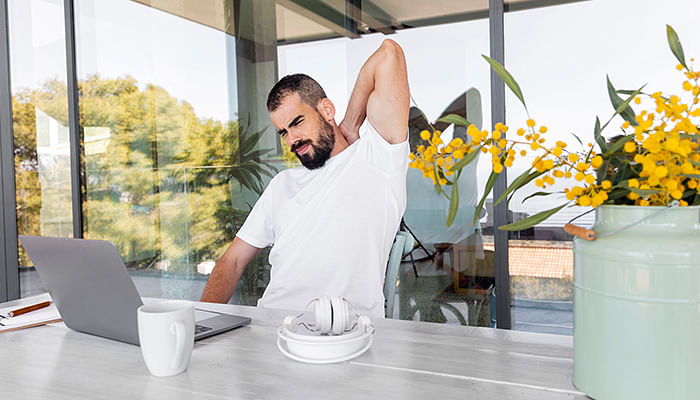
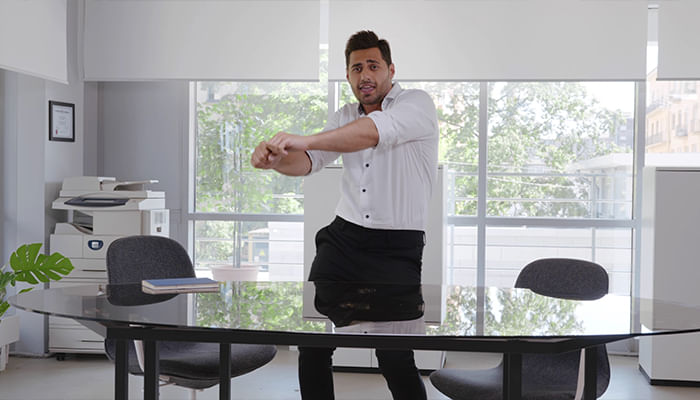
Neck tilts, shoulder rolls, torso twists, wrist stretches, and standing backbends are great stretching exercises at work to relieve tension.
Try desk exercises like leg raises, shoulder blade squeezes, seated marches, or isometric core holds. They're subtle yet effective.
Ideally, take a movement break at the office every 30–60 minutes. Even a 2-minute stretch makes a difference.

Table Of Contents
We spend a large part of our waking hours at work, sitting, typing, scrolling, and often barely moving. While modern workspaces are designed for efficiency, they’re not always built with movement in mind. For many of us, staying active can feel impossible within the confines of a 9-to-5 job. But here's the good news: a workout at work is not only possible, it’s incredibly beneficial and easier than you might think.
Incorporating an office workout routine into your daily schedule can help you stay healthy, reduce stress, and improve productivity. And no, you don’t need a gym membership or a full hour to see results. From desk exercises for office workers to quick workouts during work, this guide will show you how to stay fit at work without stepping outside the office.
Sitting for long hours has been linked to a range of health issues, from back pain and obesity to cardiovascular problems. According to a study published in the Journal of Occupational Health Psychology, workplace physical activity can significantly reduce stress and improve mental well-being. Another study from the British Journal of Sports Medicine recommends breaking up long periods of sitting with short bouts of activity every 30 minutes.
This is where exercises at the workplace come in. You don’t need intense gym sessions; just consistent movement throughout your day can help you avoid common desk-job-related ailments.
Creating a sustainable office workout routine starts with a simple mindset shift: movement is not an interruption; it’s essential.
Rather than aiming for a long session, break your day into micro-workouts. Schedule 5 to 10-minute movement breaks every two hours. Set reminders on your phone or calendar. These movement breaks at the office not only activate your body but also refresh your mind.
Examples:
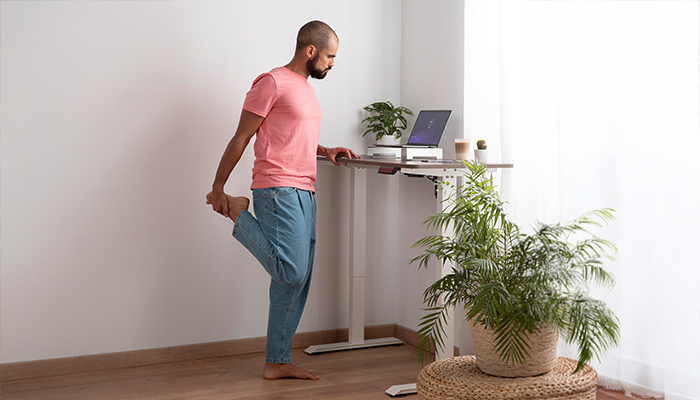
Yes, you can work out without leaving your desk. Here are some effective, discreet desk exercises for office workers:
These simple office workouts may seem basic, but they are great for circulation and posture correction.
If you're looking for stretching exercises at work, here are some essentials:
These stretches ease muscle stiffness, especially in your shoulders, back, and wrists.
Research supports what many have long suspected: staying active at work helps fight fatigue, improves focus, and reduces musculoskeletal pain. According to Public Health England, office workers should aim for at least two hours of standing or light activity during the workday, building up to four hours.
Even simple office workouts like standing meetings, walking discussions, and taking stairs can contribute to this daily goal. These small but consistent efforts offer cumulative health benefits.

Standing desks and sit-stand converters encourage movement. Even if you don’t have one, you can alternate between sitting and standing during calls or while reading documents.
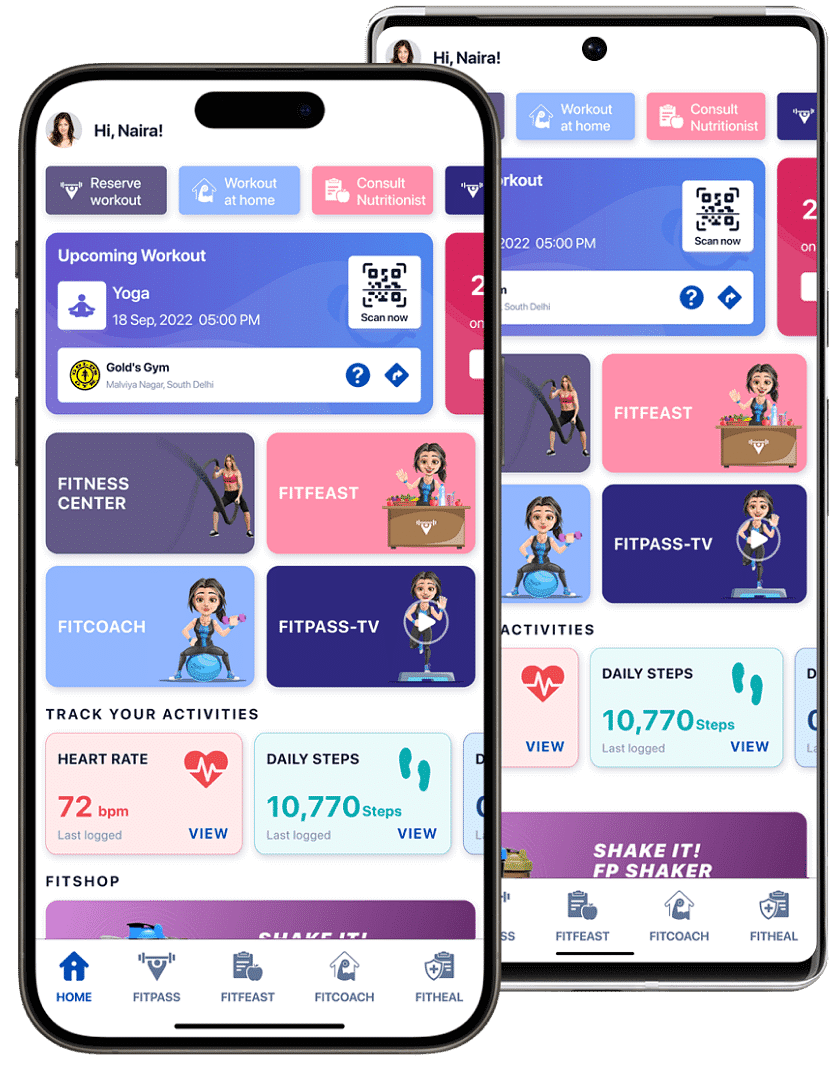
Fitness trackers, reminder apps, and fitness apps like FITPASS are excellent for building habits. Use them to schedule quick workouts during work or remind you to stretch.
Instead of scrolling through social media during lunch, try a brisk walk, stair climb, or even a 10-minute bodyweight circuit. It resets your posture and gives your brain a midday refresh.
If you're an employer or team lead, consider encouraging these employee workout ideas:
These ideas create a culture of workplace fitness, leading to happier, healthier, and more engaged employees.
Some of us might feel awkward stretching or squatting in front of colleagues. Here’s how to keep things subtle:
You’ll be surprised how effective these small moves can be over time.
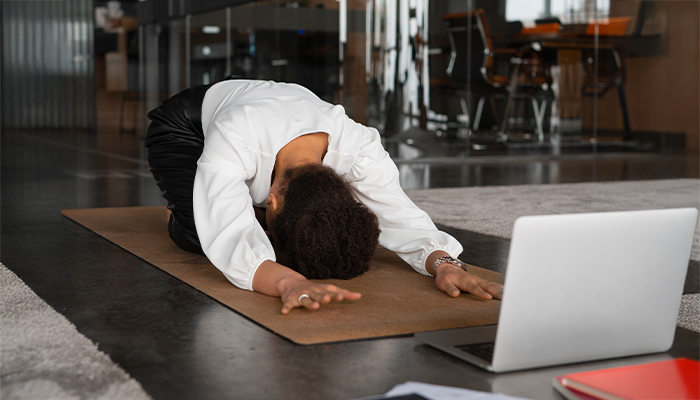
Movement isn’t just about physical health; it has a direct link to focus and efficiency. A study by the University of Illinois found that brief mental breaks can significantly improve concentration. When combined with physical activity, the effect is even more powerful.
So, use those 2–3 minute breaks for leg stretches or brisk walks to the water cooler. You’ll return to your tasks sharper and more alert.
Here’s a sample day to help you schedule movement without disrupting work:
This routine ensures you move every 90–120 minutes, improving energy and posture.
A workout at work doesn’t need to be complicated. It’s about making movement a part of your daily routine, without disrupting your job or looking out of place. With some planning and a little creativity, you can build an office workout routine that helps you stay fit at work, feel energised, and stay sharp all day long.
The workplace is changing, and so should the way we move in it. So, whether you're typing away at a desk, running between meetings, or on back-to-back calls, you now have tools and ideas to weave workplace fitness into your 9 to 5.