The writers, storytellers and day-dreamers - making sure that they pen down their thoughts in the best possible manner. With an expertise in writing for Health & Lifestyle, they used the platform to share their knowledge to the readers.
How many times should I do office exercises in a day?
You can perform short sets of office fitness exercises every 1–2 hours. Even 2–3 rounds of 5–10 minutes daily can make a big difference.
Can I do office exercises without anyone noticing?
Absolutely! Discreet office exercises like seated core twists, shoulder rolls, and toe taps are subtle and effective without drawing attention.
What are the best office exercises for posture?
The best office exercises for posture include neck rolls, chest openers, seated spinal twists, and shoulder blade squeezes. These improve alignment and reduce stiffness.
Are standing desk exercises better than seated ones?
Both are beneficial. Standing desk exercises like calf raises or leg swings add dynamic movement, while seated office exercises target core and posture with minimal effort.
Can't find an answer? Reach out to our team directly at care@fitpass.co.in or dial 1800-5714-466.
Best Fitness App
Trusted by over 11 million+ customers all across India since 2016
In today’s time, when everyone has a busy schedule, fitness often takes a backseat. With long hours spent sitting at desks, poor posture and a lack of movement are common issues faced by office workers. But what if we told you that staying active at work doesn't require gym clothes, extra time, or fancy equipment? Welcome to the world of smart office exercises, simple movements you can do at your desk or in your office that improve mobility, posture, and energy levels.
These office exercises aren’t just about stretching your legs. They help reduce stress, boost circulation, and maintain core strength. Whether you're working from home or back at your workplace, these quick office workouts can be easily added to your routine. Let’s dive into an office workout routine that’ll help you stay fit, alert, and productive, all without stepping out of your workspace.
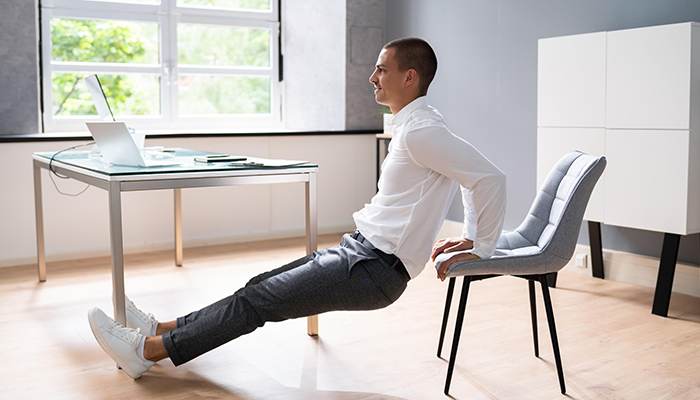
Let’s begin with a classic adapted for the office, the desk pushup. Unlike traditional push-ups, this version requires no floor space. All you need is a sturdy desk that won’t move.
How to do it:
Stand a few feet away from your desk.
Place your palms on the edge of the desk, shoulder-width apart.
Keeping your body straight, bend your elbows to lower your chest toward the desk.
Push back up to the starting position.
Do 10–15 repetitions. Repeat 2–3 sets during the day.
These discreet office exercises are perfect for building upper-body strength while staying in your workwear. Over time, they help develop your chest, arms, and core while keeping your blood flowing.
Now that we’ve tackled upper-body strength, let’s balance things out with a leg-focused movement.
Think of this as a lower-body counterpart to desk push-ups. Chair squats in an office-style are ideal for engaging your glutes, quads, and hamstrings, all without breaking a sweat or raising eyebrows.
How to do it:
Stand in front of your chair with feet hip-width apart.
Lower yourself until your thighs are just above the chair.
Push through your heels to return to standing.
Do 10–12 reps, 2–3 times a day.
These office leg lifts and squats activate the largest muscles in your body, helping you burn calories and improve posture. They’re especially useful if you sit for long stretches without breaks.
With your legs and arms now energised, it’s time to address one of the most neglected areas: your core.
Sitting doesn’t have to mean slouching. This office core workout is designed to strengthen your midsection using only a swivel chair and your own bodyweight.
How to do it:
Sit upright with feet flat on the ground.
Cross your arms over your chest.
Twist your torso to one side using your core muscles, hold for 2 seconds, then return.
Repeat on the other side.
Do 15 reps per side, twice daily.
These seated office exercises not only tone your abs but also improve spinal mobility. Regular practice supports better posture and alleviates lower back discomfort, especially crucial for desk jobs.
But a strong core is just one piece of the posture puzzle. Let’s shift focus to your spine and shoulders.
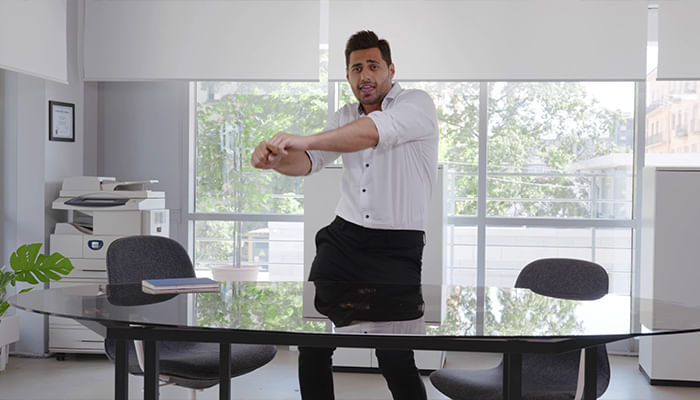
Among the best office exercises, stretching plays a vital role. Regular office stretching exercises help counteract the stiffness that builds from prolonged sitting. This mini-routine is a lifesaver for posture correction and stress relief.
Try this 3-move sequence:
Neck Rolls: Slowly roll your head in a circle, switching directions every 5 seconds.
Shoulder Rolls: Lift your shoulders toward your ears, roll them backwards and then forward.
Chest Opener: Interlace your fingers behind your back and gently pull your shoulders back to open your chest.
Perform each stretch for 20–30 seconds. Do this 5-minute office exercise every few hours.
This stretch combo increases blood flow and supports office mobility exercises, making you feel refreshed and focused.
Now that your muscles are loosened and your posture realigned, let’s look at exercises that keep you moving consistently throughout the day.
Micro workouts, short bursts of activity, are trending for good reason. These micro workouts at work involve short, simple movements you can do frequently throughout the day. Think of them as built-in office desk fitness.
Try these smart office moves:
Calf raises while brushing your teeth or waiting for coffee.
Toe Taps under your desk during meetings.
Shoulder Shrugs during emails.
March in Place while on calls.
Each mini-move takes less than a minute, but the cumulative effect boosts metabolism and combats sedentary fatigue.
These subtle workplace exercises help build a habit of movement, without interfering with your workflow or drawing attention.
You don’t need to do all these exercises in one go. The key to an effective office workout routine is consistency and variety. Here’s how you can build your personalised plan:
Morning (Start of Day):
1 round of Desk Push-Ups.
Chair Squats (2 sets).
Light stretching (Neck + Shoulder rolls).
Mid-Morning (After a Break):
Seated Core Twists.
Chest Opener stretch.
Afternoon (Post-Lunch Slump):
March in Place or Calf Raises.
Repeat Desk Push-Ups (1 set).
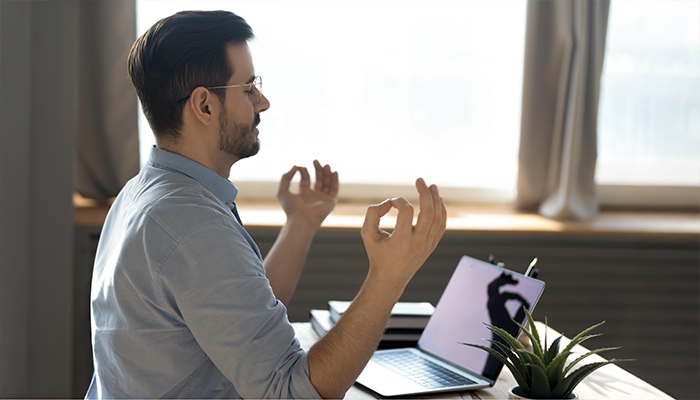
1-minute desk breathing or mindfulness stretch.
Evening (Before Leaving Work):
Chair Squats (1 set).
Final Shoulder and Chest Stretch.
By mixing these workplace fitness tips into your schedule, you maintain momentum without needing long breaks or additional equipment. It’s all about moving a natural part of your workday.
Staying fit in the workplace doesn’t require fancy routines or special equipment. These smart office exercises prove that just a few intentional movements daily can improve your physical and mental well-being. Whether you choose desk workouts, office stretching exercises, or micro workouts at work, the key is consistency.
By integrating these routines into your schedule, you not only enhance productivity but also reduce the long-term health risks of a sedentary lifestyle. So, next time you feel sluggish or stiff at your desk, try one of these quick office workouts—your body and mind will thank you.