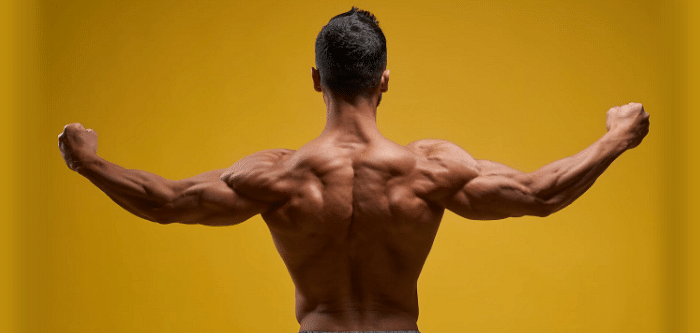
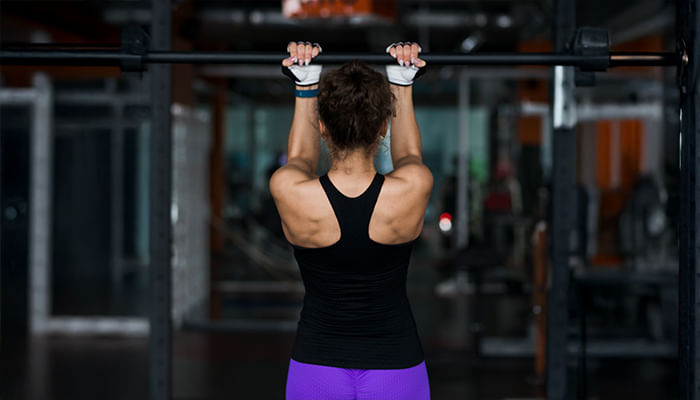
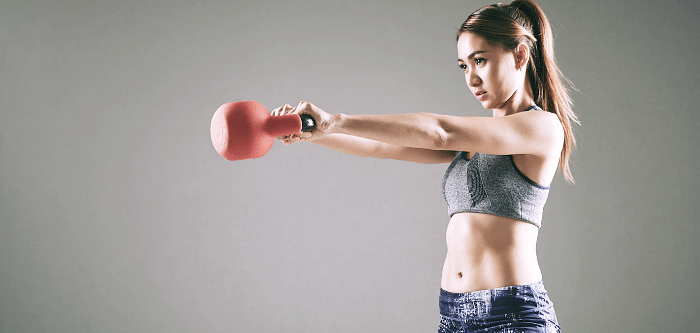
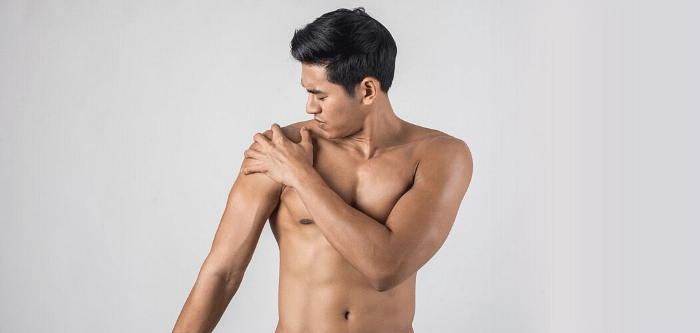
Your back and shoulder muscles support almost every upper body movement, whether you are lifting groceries, carrying a bag, or learning your first pull up. However, many workout routines focus mainly on the chest and arms and overlook these important muscle groups. When the back and shoulders remain weak, posture begins to suffer. Rounded shoulders, frequent neck stiffness, and a higher chance of rotator cuff problems often follow.
This guide covers 15 carefully selected exercises you can do in the gym or at home. Each movement includes clear instructions, recommended sets and repetitions, the muscles involved, and simple progressions for beginners as well as more experienced trainees. The goal is to help you build strength safely, improve posture, and train with confidence.
What Muscles Are You Actually Training?
Before starting exercises, it helps to know which muscles you are working. Understanding this makes it easier to choose the right movements and avoid imbalances.
Back Muscles You Are Training
|
Muscle
|
Where It Is Located
|
Main Function
|
Why It Is Important
|
|
Latissimus dorsi (Lats)
|
Large muscles on the sides of the mid and upper back
|
Pull the arms down and toward the body
|
Builds back width and improves pulling strength such as rows and pull ups
|
|
Trapezius (Traps)
|
From the base of the neck to the middle back
|
Elevates and stabilises the shoulder blades
|
Helps maintain upright posture and reduces neck strain
|
|
Rhomboids
|
Between the shoulder blades
|
Pull the shoulder blades together
|
Prevents rounded shoulders and improves posture, especially for desk workers
|
|
Erector spinae
|
Runs along the spine from upper to lower back
|
Supports and stabilises the spine
|
Important for lifting safely and preventing lower back pain
|
|
Teres major and minor
|
Upper outer back near the shoulders
|
Assists shoulder extension and rotation
|
Supports stronger pulling movements and shoulder stability
|
Shoulder Muscles You Are Training
|
Muscle
|
Where It Is Located
|
Main Function
|
Why It Is Important
|
|
Anterior deltoid (Front delt)
|
Front portion of the shoulder
|
Lifts the arm forward and helps in pressing movements
|
Used in pushups, bench press, and everyday lifting tasks
|
|
Lateral deltoid (Side delt)
|
Outer side of the shoulder
|
Raises the arm sideways
|
Creates shoulder width and improves overhead strength
|
|
Posterior deltoid (Rear delt)
|
Back of the shoulder
|
Moves the arm backward
|
Essential for balanced shoulders and correcting posture
|
|
Rotator cuff muscles (supraspinatus, infraspinatus, subscapularis, teres minor)
|
Deep stabilising muscles inside the shoulder joint
|
Stabilises and controls shoulder movement
|
Most important muscles for preventing shoulder injuries and pain
|
How to Use This Exercise List
Back and shoulder muscles work together. If you only train shoulders, posture remains weak. If you only train back, pressing strength stays poor. So the goal is not to randomly try exercises, it is to cover three movement types:
- Pulling movements → build back thickness and posture
- Overhead movements → develop shoulder strength
- Stability movements → protect joints and prevent pain
Below are the most effective exercises you can perform either in a gym or at home. Start with basic versions and progress gradually.
Warm-Up (Never Skip This)
Many shoulder injuries happen not during heavy lifting, but during cold starts.
Before every workout, do this 5-minute warm-up:
- Arm circles : 20 forward, 20 backward
- Shoulder rolls : 15 reps
- Wall slides –:12 reps
- Scapular pushups : 10 reps
This activates the rotator cuff and prepares the joint.
Exercises for Back and Shoulders
1. Deadlift
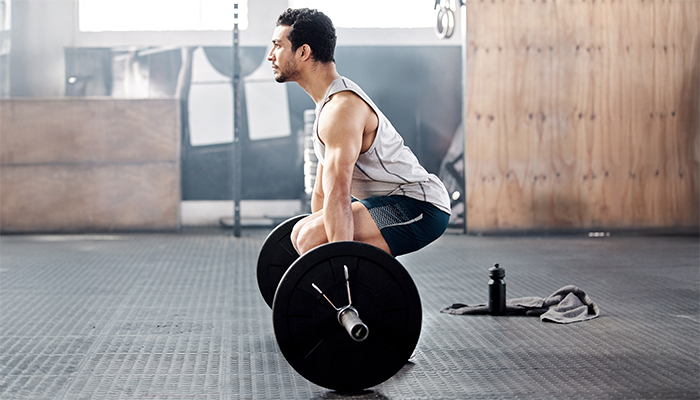
Muscles targeted: Entire posterior chain from erector spinae, lats, traps, glutes, hamstrings
Level: Intermediate
How to perform:
- Stand with feet hip-width apart, barbell over your mid-foot
- Hinge at the hips and grip the bar just outside your knees (double overhand or mixed grip)
- Brace your core, pull your shoulder blades back and down ("chest up")
- Drive through the floor as you extend hips and knees simultaneously and bar stays close to your body throughout
- Lock out at the top by squeezing your glutes; lower the bar with control
2. Barbell Bent-Over Row

Muscles targeted: Lats, rhomboids, traps, rear delts, biceps
Level: Beginner to intermediate
How to perform:
- Stand with feet shoulder-width apart, barbell on the floor
- Hinge forward at the hips until your torso is roughly 45–60° to the floor
- Grip the bar slightly wider than shoulder-width (overhand for back focus; underhand for more bicep engagement)
- Pull the bar toward your lower chest/upper abdomen than lead with your elbows
- Squeeze your shoulder blades together at the top, then lower with control
3. Lat Pulldown
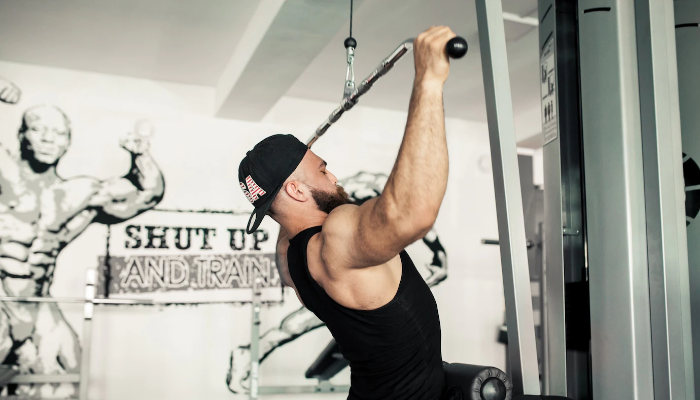
Muscles targeted: Latissimus dorsi, teres major, biceps, rear delts
Level: Beginner
How to perform:
- Sit at a lat pulldown machine and secure your thighs under the pad
- Grip the bar wider than shoulder-width (overhand grip)
- Lean slightly back (about 20–30°), pull the bar down toward your upper chest
- Lead with your elbows pulling down and back, imagine you're trying to put them in your back pockets
- Control the return, don't let the weight stack slam
4. Seated Cable Row
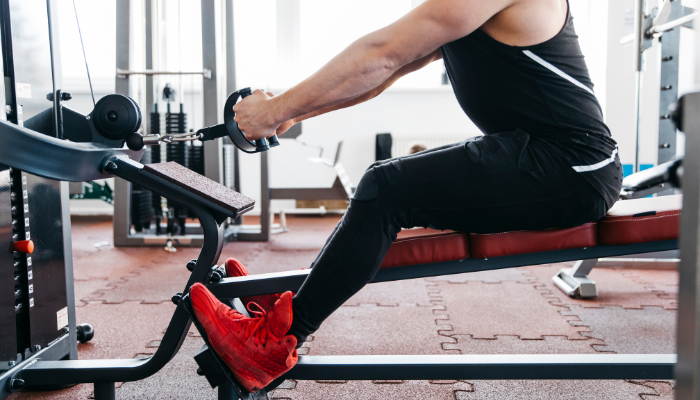
Muscles targeted: Mid-back, rhomboids, lats, traps, biceps
Level: Beginner
How to perform:
- Sit at the cable row machine, feet on the platform, knees slightly bent
- Grip the handle with both hands, keep your back straight and chest tall
- Pull the handle toward your lower abdomen — elbows should travel close to your sides
- Squeeze your shoulder blades together before releasing
- Slowly extend your arms back to the starting position
5. Overhead Barbell Press (OHP)
Muscles targeted: Anterior and lateral delts, upper traps, triceps, core
Level: Intermediate
How to perform:
- Stand with feet shoulder-width apart, hold barbell at shoulder height (just above collarbone)
- Grip slightly wider than shoulder-width, elbows pointing forward at ~45°
- Brace your core, squeeze glutes, and press the bar directly overhead
- Lock out fully at the top — bar should be over your ears, not in front
- Lower the bar with control back to clavicle level
6. Dumbbell Lateral Raise
Muscles targeted: Lateral (side) deltoid
Level: Beginner
How to perform:
- Stand holding dumbbells at your sides, palms facing inward
- With a slight bend in elbows, raise both arms out to the sides until they reach shoulder height
- Lead with your pinky finger slightly higher than your thumb (like pouring a jug of water) — this maximally activates the lateral delt
- Pause briefly at the top; lower slowly over 3–4 seconds
7. Face Pulls
Muscles targeted: Rear delts, external rotators of the rotator cuff, middle traps, rhomboids
Level: Beginner and criminally underused
How to perform:
- Set a cable machine to upper chest height with a rope attachment
- Grip the rope with both hands, step back until there is tension in the cable
- Pull the rope toward your face, separating the ends as you pull (hands move toward your ears)
- Elbows should be at shoulder height or higher at the end of the movement
- Pause and squeeze your rear delts; return with control
8. T-Bar Row
Muscles targeted: Middle back, lats, rhomboids, traps
Level: Intermediate
How to perform:
- Load a T-bar machine (or landmine setup)
- Straddle the bar, hinge forward at the hips with a flat back
- Grip the handles (neutral or V-grip), pull the bar up toward your lower chest
- Lead with elbows, squeeze your shoulder blades at the top
- Lower with control
9. Pull-Up / Chin-Up
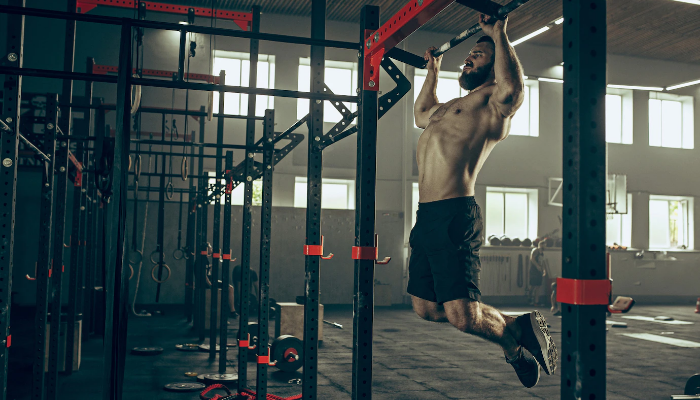
Equipment: Pull-up bar (door frame bar ~₹800–1,200)
Muscles targeted: Lats, teres major, biceps, core
Level: Intermediate
How to perform:
- Hang from a pull-up bar with an overhand grip (pull-up) or underhand (chin-up), arms fully extended
- Depress your shoulder blades before pulling (don't start from a shrugged position)
- Pull yourself up by driving your elbows down toward your hips
- Chin should clear the bar; full range of motion is key
- Lower yourself slowly over 2–3 seconds (the eccentric is critical for muscle growth)
10. Pike Push-Up
Equipment: Bodyweight only
Muscles targeted: Anterior and lateral delts, upper chest, triceps
Level: Beginner
How to perform:
- Start in a downward dog yoga position — hips high, body forms an inverted V
- Bend your elbows and lower the top of your head toward the floor
- Your elbows should flare outward at about 45°
- Push back up to the starting position
11. Superman Hold
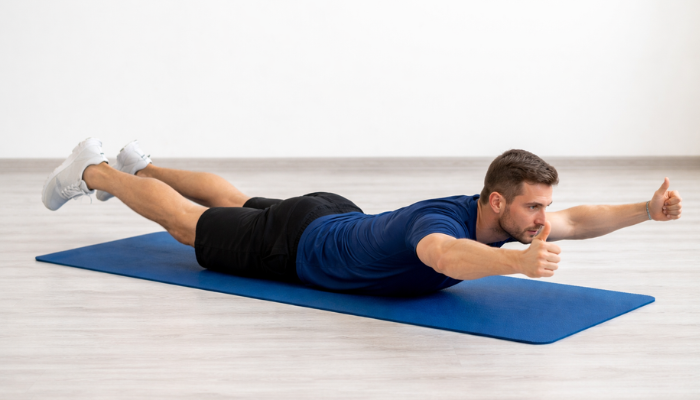
Equipment: Bodyweight only
Muscles targeted: Erector spinae, glutes, lower traps, rear delts
Level: Beginner
How to perform:
- Lie face down on the floor, arms extended overhead
- Simultaneously lift your arms, chest, and legs off the ground
- Squeeze your glutes and lower back at the top
- Hold for 2–3 seconds at the top, then lower
12. Resistance Band Face Pull
Equipment: Resistance band (anchor at door frame)
Muscles targeted: Rear delts, external rotators, mid traps
Level: Beginner
How to perform:
- Anchor a resistance band at face height
- Grip both ends with an overhand grip, step back for tension
- Pull the band toward your face, keeping elbows at ear height
- Separate your hands as you pull — palms should face outward at the end
- Return slowly
13. Dumbbell Reverse Fly (Rear Delt Fly)
Equipment: Dumbbells (light weight)
Muscles targeted: Rear delts, rhomboids, mid traps
Level: Beginner
How to perform:
- Hinge forward at the hips, torso nearly parallel to the floor
- Hold dumbbells directly below your chest, palms facing each other
- With a slight bend in elbows, raise both arms out to the sides
- Squeeze shoulder blades together at the top
- Lower slowly
14. Dumbbell Arnold Press
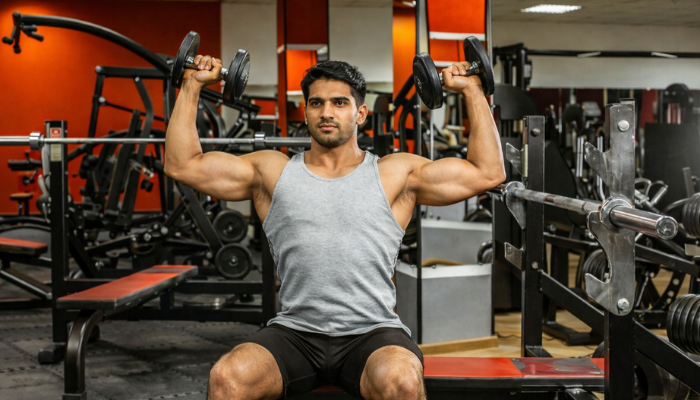
Equipment: Dumbbells
Muscles targeted: All three deltoid heads, rotator cuff
Level: Beginner to intermediate
How to perform:
- Sit or stand holding dumbbells at shoulder height, palms facing you
- As you press up, rotate your palms outward (away from you)
- At the top, palms fully face forward — fully locked out
- Reverse the rotation on the way back down
15. Inverted Row (Using a Table or Barbell in Rack)
Equipment: A sturdy table or low-set barbell
Muscles targeted: Upper back, rear delts, biceps, core
Level: Beginner
How to perform:
- Lie under a sturdy table; grip the edge with both hands (overhand, shoulder-width)
- Keep your body in a straight line from heels to head
- Pull your chest up to the table edge
- Squeeze your shoulder blades at the top
- Lower slowly
Sample Weekly Training Plan
|
Day
|
Focus
|
Exercises
|
|
Monday
|
Back (Gym)
|
Deadlift, Bent-Over Row, Lat Pulldown, Seated Cable Row, Face Pulls
|
|
Wednesday
|
Shoulders (Gym)
|
OHP, Lateral Raise, Arnold Press, Face Pulls, Rear Delt Fly
|
|
Friday
|
Full Back & Shoulder (Home)
|
Pull-ups, Pike Push-ups, Superman Hold, Dumbbell Arnold Press, Inverted Row
|
|
Saturday
|
Active Recovery
|
Stretching, band pull-aparts, mobility work
|
Progressive Overload: How to Keep Getting Stronger
Building muscle requires systematically increasing the challenge over time. Follow this framework:
- Week 1–2: Master form with a comfortable weight (RPE 6–7 out of 10)
- Week 3–4: Add 1–2 reps per set, or increase weight by 2.5–5 kg
- Week 5–6: Increase total sets by 1 (from 3 to 4)
- Every 6–8 weeks: Take a deload week — reduce volume by 40% to allow full recovery
- Track your lifts: Use a notebook or app — progressive overload is only possible when you know your baseline
Common Mistakes to Avoid
- Training rear delts only once a week
The rear deltoids recover quickly and respond better to frequent practice. Include some rear-delt work two to three times per week instead of treating it as an occasional add-on.
- Ignoring the lowering phase of a rep
Do not just lift the weight and drop it. Lower the weight slowly for about three to four seconds. Controlled lowering increases muscle engagement and improves strength development.
- Depending only on cable machines
Machines are useful, but relying on them alone limits stabiliser muscle activation. Include free-weight exercises with dumbbells or barbells to train coordination and joint control.
- Skipping rotator cuff exercises
Movements such as face pulls and band external rotations help protect the shoulder joint. Add at least one of these to every shoulder workout to reduce injury risk.
- Using very heavy weights for lateral raises
When the weight is too heavy, the upper traps take over and the side deltoids stop doing the work. Choose a lighter weight that allows smooth, controlled motion.
How Long Until You See Results?
With consistent training (3× per week) and adequate protein intake (1.6–2.2g per kg of bodyweight):
- 2–4 weeks: Improved muscle activation and mind-muscle connection; slight strength gains
- 6–8 weeks: Visible muscle tone improvements; posture noticeably better
- 12–16 weeks: Significant size and strength gains; back width and shoulder roundness visibly developed