Sports performance for half marathon distance runners always brings one thing to mind. That’s cadence running.
If you are a regular 9-5 corporate employee or an athlete, this blog explores top-tier ways to boost your cadence for long distance running. There are many exercises for strength, balance, and neuromuscular training that compound to improve sports performance.
At FITPASS, we know fitness means different things for different people.
If you love cardio, strength training, and running, this blog is for you.
How Cadence Running Transforms Distance Runners
"Most people run a race to see who is fastest. I run a race to see who has the most guts."
— Steve Prefontaine
These words from legendary American distance runner Steve Prefontaine crack a hard nut. That speed is not why we run for distance. The half marathon is the best distance run for beginners as well as recreational runners. Something like running a half marathon requires sheer stamina and strength to go on. This does not come naturally if your running form and cadence are not accurate.
Things to Know About Cadence Running
|
|
Questions
|
Explaination
|
|
What is cadence in running?
|
Cadence in running is the total number of steps per minute you take during long distance running.
|
|
What is an ideal cadence in running?
|
170-180 steps per minute
|
|
Why does cadence running matter?
|
Cadence matters, as it gives distance runners a measure of how quickly their feet strike the ground (both left and right) with the step rate per minute.
|
|
How is speed determined for distance runners?
|
Cadence x Stride length = Speed
|
A healthy cadence for most recreational and average runners falls between 150 and 190 steps per minute.
Maintaining a higher cadence helps your feet land directly beneath your centre of gravity. That is, taking a shorter stride length reduces braking forces. So your joints do not absorb the impact of the applied running force. The shins, knees, and lower back face lower impact with a higher cadence.
How Gym Treadmills Help to Build Cadence?
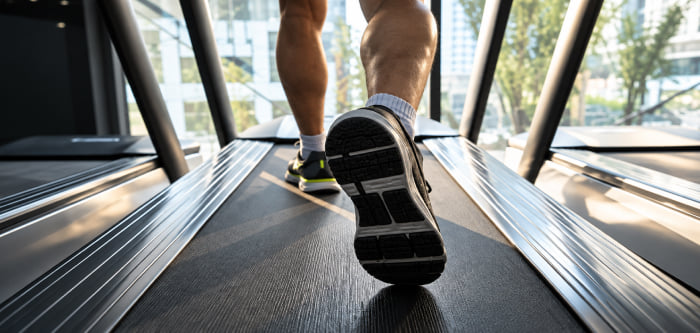
People subconsciously increase their running speed during an outdoor running session. Many long distance runners prefer outdoor running trails for terrain practice. But when working on specific goals like building cadence and refining running strategies, they choose indoor running sessions on the treadmill.
Treadmills become very useful when it comes to tracking your:
- Strides
- Distance
- Cadence
- Speed
- Pace
With a treadmill, you get to practice with unchanging speed. Making it an ideal tool to build cadence and increase steps per minute (SPM). It offers a controlled setting to help you achieve your goals slowly, without damaging your joints with the wrong running technique.
|
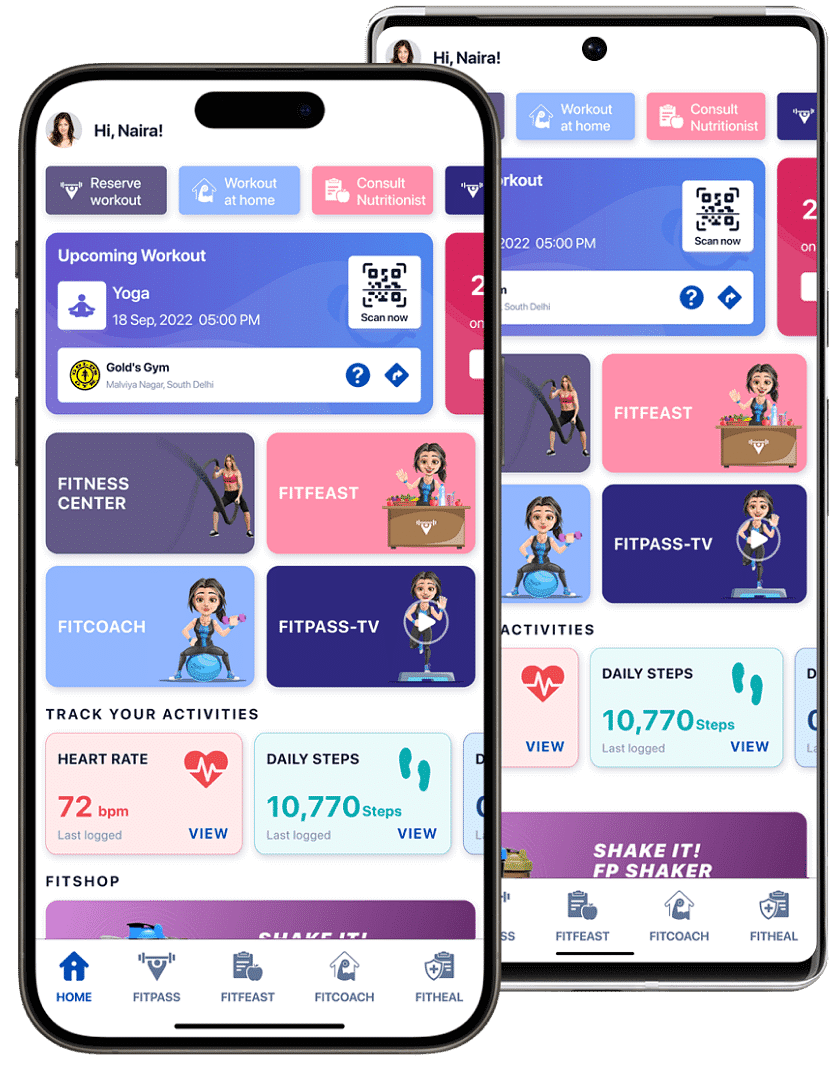
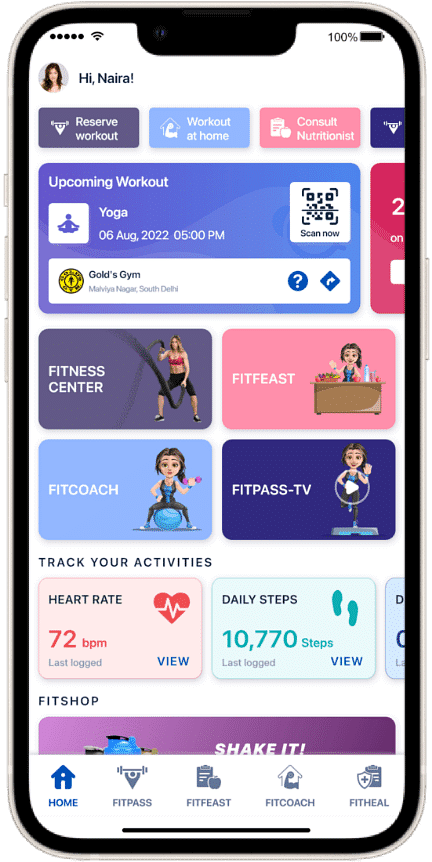
Begin your cadence retraining in a perfectly regulated atmosphere at any studio gym near you with FITPASS.
|
Common Mistakes Beginner Runners Make
- Overstriding: A higher running cadence also solves the mistake every beginner makes at one point in their running saga: overstriding. Your feet are not supposed to be out in front of your hips. They must remain aligned with the centre of gravity to keep the runner in momentum. This is the best way to keep your joints safe.
- Running Form: Maintaining running form comes into play when a runner compromises their body in order to exert more, run faster, or cover more distance. Running on the gym treadmill allows you to stay mindful of your form while the gym staff guides your practice for the run.
- Breathwork: Do not chase speed before you build your aerobic foundation. As Bill Dellinger said, “Good things come slow, especially in distance running.” Your breathwork has to support the long distance run. This not only helps with fitness progression but also helps to avoid injuries.
Top-Tier Half-Marathon Strategies for Distance Runners
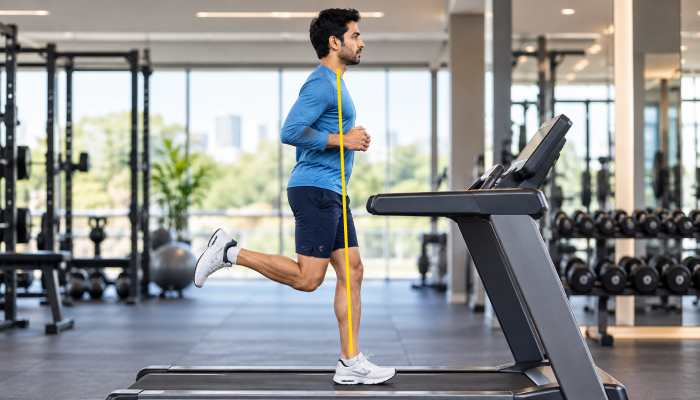
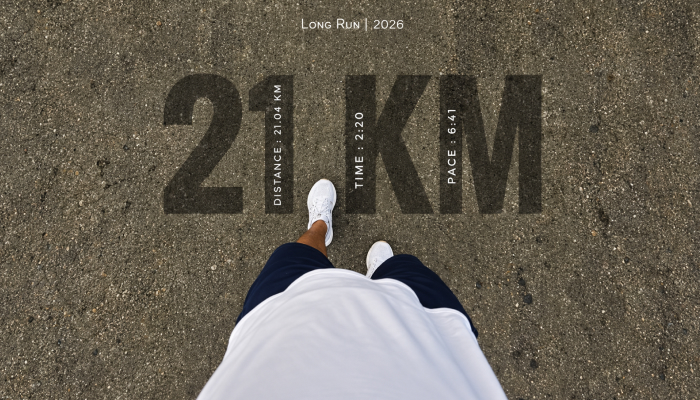
The half marathon distance is 21 km. It is neither too short nor too extreme.
However, it is the best distance to perfect your running form. This is where you experience long distance running and apply the best sports performance strategies for long distance runners. Let’s take a look at some of the best running strategies.
Cadence Retraining
Cadence retraining is a low-cost and effective strategy to optimise running biomechanics. Practise your running form, timing, and cadence at the nearest gym to your home or office with FITPASS.
If you take more steps per minute, your strides become smoother. Increasing cadence helps to reduce excessive loading. Besides, the best running form is where the feet and the body's centre of gravity are right above each other. Research by NCBI suggests that maintaining running form and raising cadence by around 5–10% may improve running mechanics without increasing energy cost. For cadence retraining, first track your natural cadence during an easy run. Then practise short intervals at a slightly quicker rhythm.
Avoiding Achilles' Heel
Good running form is about moving efficiently and staying comfortable. Even when fatigue sets in. Keep your posture tall, land beneath your centre of mass, relax your shoulders and avoid overstriding. Hold your horses! Do not force a dramatic change overnight. Introduce one adjustment at a time, especially if you are increasing mileage, speed, or cadence. A coach or qualified trainer can help identify inefficient movement patterns before they become recurring problems.
What is the 80/20 Rule?
The 80/20 rule generally means completing around 80% of your running at an easy intensity. And reserving roughly 20% for harder efforts such as intervals, tempo runs, or hill repeats. It helps you build lung capacity while limiting the fatigue created by high-intensity training. The easy runs may feel controlled enough for conversation. Harder sessions may have a clear purpose and adequate recovery around them. The exact ratio is not universal. Adjust it according to your experience, race distance, and training load.
Cadence Running for 5K Run
For a 5K run, cadence running drills can help you stay light and controlled with pace rises, unlike in full marathons. Chasing a fixed 180 steps per minute? Your ideal cadence depends on the following:
- your height
- running speed
- running terrain
- years of experience
Focus on quick, quiet steps and a relaxed upper body. The goal is a more efficient rhythm, not speedy footwork. Cardio coaches recommend starting with 4–6 repetitions of 1–2 minutes at a slightly quicker cadence during an easy run, followed by equal periods of relaxed jogging.
Strength Training for Running
Yes, long distance running is the best cardio. Fitness experts say that strength work supports force production, posture, endurance, and running economy. Think calves, hamstrings, glutes, hips, and core. It depends on what you want to achieve with the runs. Before choosing a strength training workout, ask why you are doing it.
- Are you cadence running for a 5K run, 10K, or half-marathon?
- Are you distance running as cardio for weight loss?
- Are you doing it as a recreational run on weekends?
- Are you running to complete daily physical activity?
- Are you long-distance running for heart health?
- How much recovery time can you realistically protect each week?
FITPASS gives you access to gyms and strength-training formats like HIIT workouts, functional training, core, MMA, Pilates, yoga, and more. There are 15+ workout formats allowing your fitness regimen to support the complete runner, not just the next run. Begin with manageable loads and the right technique today.
FITCOACH Helps Your Strength Training for Running
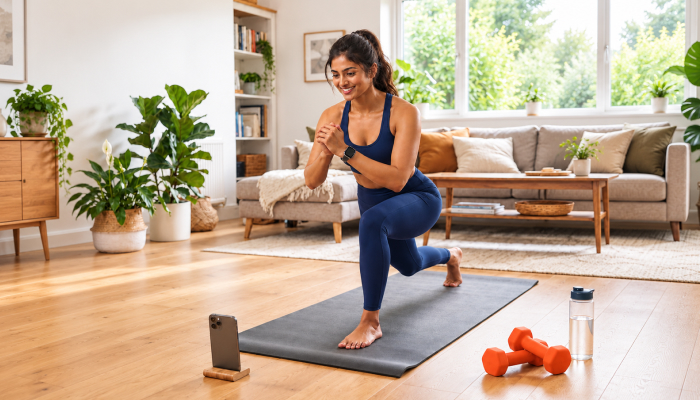
Long-distance running also calls for strength training exercises, mobility workouts, and warm-up routines specific to your fitness level. Do not take on more load than necessary. It increases the risk of sports injuries. Is running longer distances your goal?
FITCOACH progressively curates workout plans personalised for your fitness.
Here’s what you get with FITCOACH:
- learns from your inputs and mistakes during the reps.
- tailors your workout plan for your running goals.
- tracks your habits and performance with motion tracking.
- fine-tuned workout recommendations based on your body and preferences.
Then FITCOACH A.R.I.A. progressively brings you new routines best suited for your runner's journey. The smart motion tracking feature allows tracking your posture and reps.
What could be a better personalised strength training routine that evolves with you?
Find a studio gym near you alongside FITCOACH online personal training for runners with FITPASS.