“Inspiration strikes when the time is right.
Habits are substantial. More dependable.”
Habits are dependable. Your workout habits will sustain you regardless of your inspiration or motivation. Listen. We’re all ears for explosive workout soundtracks and the Pinterest fitness inspo boards. Though this article backtracks to the trivial nature of well-being. It is nothing but an amalgamation of your fitness habits and daily routines.
This is for the corporate warriors planning to get back in the workout era. At the same time, this is for the happy-go-lucky grandpa just wishing to carry his grandson for longer than 5 minutes without a backache. Some things are out of your hands because the mind holds the key to it. We are discussing psychologically proven ways to build new workout habits that bring change.
Let’s understand the psychology of habit formation. This article touches on dopamine reinforcement and the 21 days challenge towards consistency through the lens of health and fitness.
Habit Formation in Psychology
Ever bought new running shoes, put them by the door, and then… watched them collect dust for months? We’ve all been there. The intention is there. The gear is there. But the habit? That seems to be missing. About 40% to 45% of what we do every day isn’t a decision. It’s a habit.
That means nearly half your life runs on autopilot.
We at FITPASS are aware that being fit involves more than lifting weights.
As the market leader in fitness, we have witnessed millions of people attempt to reach their personal fitness goals. It's not always the strongest people who succeed. It's the ones who mastered their own biology and habits. Let's take you from "I should workout" to "I must workout."
Basal Ganglia: The Headquarters of Habit Formation
The basal ganglia regulates the voluntary motor movements that solidify habits in individuals. Think of it as a headquarters for our habits and routine. It is specifically responsible for changing behaviors from deliberate actions to automatic routines. Like the autopilot mode. To be specific, the dorsolateral striatum (DLS) is the structure that handles sensory responses and motor habits. It is essential for forming, storing, and executing habitual sensorimotor behaviors.
This part operates independently of conscious goal direction.
Which means it mediates habits after extensive training. Even your workout habits can be a result of this function. The best part? Habit formation in psychology proves that you have the power to decide how to change your fitness habits.
What are the 4 stages of habit formation?
The four stages of habit formation are cue, craving, response, and reward at last. Remember that we are discussing habits here, okay? They can be good ones or bad ones. You may be surprised to learn that the brain processes all your habits the same way. Any new fitness habit you develop, whether consciously or unconsciously, goes through the 4 stages of habit formation in the brain.
And in the same order.
The Anatomy of a Fitness Habit
Workout, yoga, or gym consistency isn't just a choice. It is a healthy habit loop. James Clear provides this habit-building framework in Atomic Habits, his New York Times bestselling book.
-
The Cue (The Trigger): This is the spark of motivation.
-
The Craving (The Need): This is where you choose to act.
-
The Response (The Action): This is the workout itself.
-
The Reward (The Prize): This is why your brain remembers it.
If you hack the loop from cue to reward, you've built yourself a healthy habit.
How to Self-Maneuver the Formation of Habit
Let’s say your friend Samriddhi has a habit of forgetting to drink water.
She never reaches the 2.5 liters recommended. Hence, she starts looking like a… dried apricot perhaps? And if somehow the busy bee still does not notice the dehydration. It impacts her daily productivity, vision, and fitness goals.
Now that’s a cue.
From here the goal-oriented decision-making begins.
Yes, you could remind her as a friend. But habit formation in psychology works best when the said person acts themselves. If you are this person, consciously make a choice of keeping the water bottle in line of sight. Every time you get a notification, you see the water bottle and crave a sip.
Or do it anyways, as you kept the bottle there consciously.
Then comes the response.
That is the act of actually drinking a sip before attending to the notification. Water gives you long-term rewards (better skin, fewer headaches), but the brain wants instant rewards. To really solidify the habit, you must create rewards yourself for dopamine reinforcement. If your brain feels rewarded, the habit loops again.
Switch the Gears: Decision Making to Auto Fitness Mode
Jim Ryun, a former American Olympic track and field athlete, often spoke about self-discipline and habit formation in fitness. He is regarded as one of the greatest high school athletes of the 20th century. To quote the legend, “Motivation is what gets you started. Habit is what keeps you going.”
Automatic habits require menial decision-making and processing.
Ryun didn't just run a sub-four-minute mile at the age of 17. He mastered habit formation and consistency. Taking the 21-day challenge solidifies your fitness habit. And you successfully enter auto mode. In the beginning, you are operating on goal-oriented decision-making backed by willpower. This looks like, "Oh, I want to lose 5 kg. So I will force myself to work out today even though it is raining and I am tired."
This becomes “It is 6 PM. I am putting on my sneakers." in the auto fitness mode. No debate.
When a behavior becomes automatic, it moves to a different part of the brain (the basal ganglia). It requires little to no decision-making. It becomes as automatic as brushing your teeth. You don't need "motivation" to brush your teeth. You just do it. That is the ultimate goal for habit formation psychology.
Let’s discuss how habit formation in psychology works towards achieving fitness goals in the real world.
The 21-Days Challenge for Lasting Fitness
You’ve heard the saying "It takes 21 days to form a habit." While modern science suggests it can actually take anywhere from 18 to 254 days, the 21-Days Challenge is the perfect kickstarter. It is the minimum viable threshold to teach your brain a new trick. It stabilizes your body’s rhythm, making it easier to stick to a routine. But how do you maneuver habit formation?
You need to hack the best rewarding habit loop.
Here’s how you can make it stick.
- Start small: Don’t aim for a Hulk workout on the first day. Aim for a short 20-minute burn session. That way your mind will be less likely to think of it as a burden and more like a positive activity.
- Be specific: "I will workout" is weak. "I will do chest presses at 6 PM" is strong. Hmmm… sounds like a bold conviction.
- Share your journey: Sometimes, all you need is a buddy to stay consistent. Join a workout group for accountability partners. Habit formation in psychology encourages the power of workout friendships. Your buddies can help you stay consistent for your 21 days challenge.
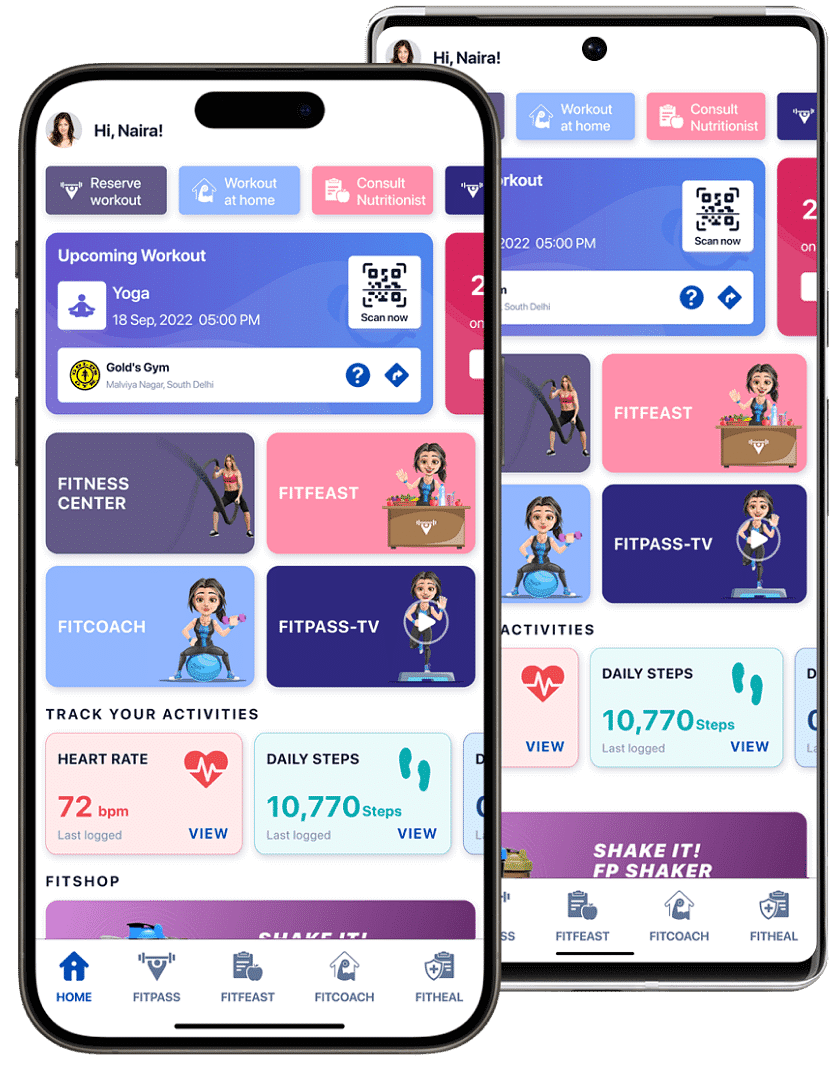
- Enter the Fitpass Era: Fitpass provides flexible wellness membership to help you reach your fitness goals. Personalize your fitness your way as per your fitness goals. So you and your buddy only pay for what you want.
- Track Progress: Seeing a workout streak on the calendar is surprisingly addictive. Try it yourself with the 21 days challenge. (We dare you!)
- Reward yourself: Not with a pint of beer! But ensure you get something that encourages you further. Finishing the 21 days habit challenge without a reward will ruin your habit loop unknowingly. Maybe get yourself the right kind of gym gloves or have a healthy cheat meal.
The 6-7-8 Rule in Fitness
Habit formation in psychology tells you to keep at it for 21 days. Hence, the 6-7-8 workout rule. This means you only take 6 workout sessions in the first month of your journey. 7 workout sessions in the second. And 8 workout sessions by the third month. This turns you into someone who works out twice a week consistently. That is the 6-7-8 rule for habit formation.
But fitness isn’t just about the hour you spend sweating per session. It’s also about the other 23 hours.
Taking the 21-day challenge for any new workout routine is a big step. But many individuals struggle with consistency. If you are someone who likes to take things one day at a time.
Here is another way to think of the 6-7-8 rule in fitness.
- 6 O’clock: Stop the caffeine and heavy meals after 6PM. This will give your digestion a break. It also helps you achieve a 12-hour fasted body before the morning workout. The process of ketosis breaks down the stored fat in your body in addition to your workout. That means you burn more calories effectively.
- 7 Hours: It is the non-negotiable sleep duration. Studies show that sleep regulates the hunger hormones. Adequate sleep also enhances performance and muscle recovery. On the other hand, sleep deprivation kills willpower. If you are tired, you are more likely to skip physical activity.
- 8 Glasses: Hydration is key. Remember the friend Samriddhi we talked about earlier? So don’t be a dried apricot. Dehydration causes fatigue. And fatigue is the enemy of motivation.
Structuring your day around these numbers creates a safety net for your new fitness habits.
Your Roadmap to Habit Formation
In a nutshell, your fitness and health depend on your workout habit.
Building a good workout habit can take 21 days. Workout consistency and discipline are all you need to do. Fitness isn't a chore. Habit formation in psychology is a series of small, quirky, science-backed loops. Taking the 21-day challenge keeps your brain in the loop, dedicated to your health and fitness goals.
Remember, Cue. Response. Reward.
If you repeat this loop as a 21 days habit challenge. You can switch to autopilot for your fitness goals. We know consistency can be hard. Honestly, that is the toughest part of every fitness journey.
FITPASS is a cohort of the best fitness coaches, nutritionists, gym partners, and individuals from all walks of life helping you achieve a healthier body. We’ve seen people work through it. You can do it too. Commit to a workout routine by easing your body into the habit. Work on dopamine reinforcement. Follow the 6-7-8 rule, a proven method to build good workout habits and workout consistency.
You have the tools. You have the science.
And with FITPASS, you have the largest fitness network backing you up. Ready to start your Day 1?
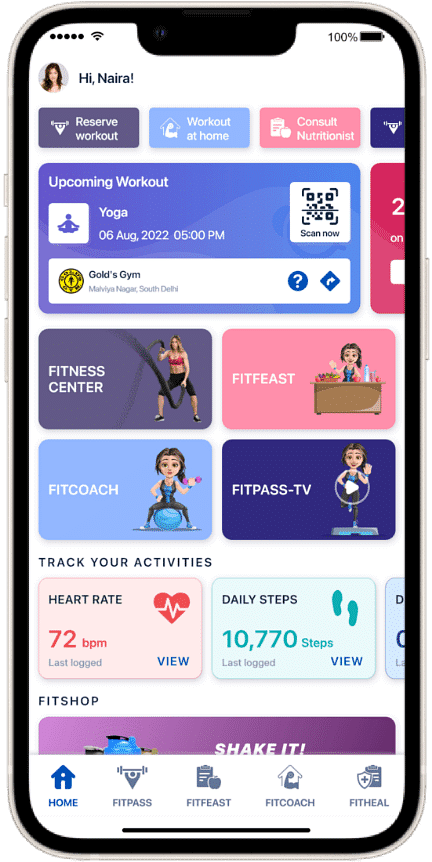
Download the FITPASS app today, and let’s build a habit that lasts a lifetime.