Loading...
loading...
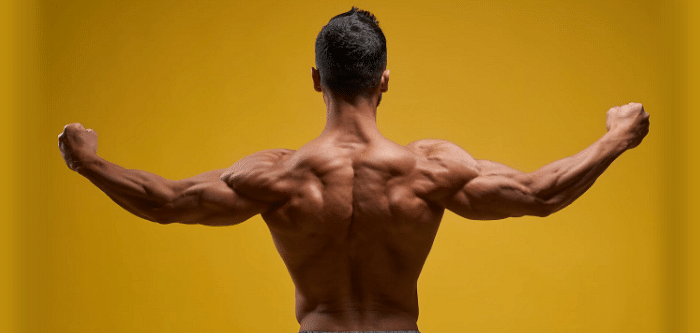

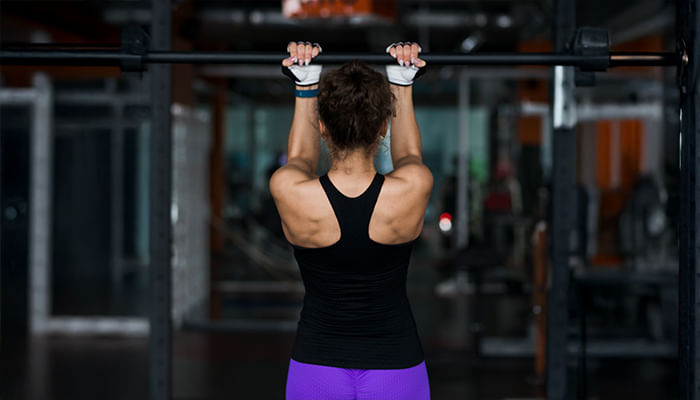
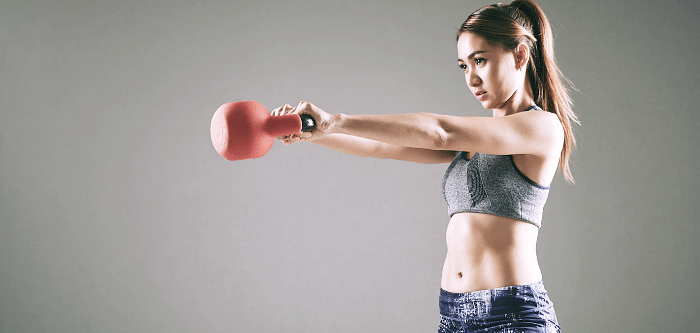
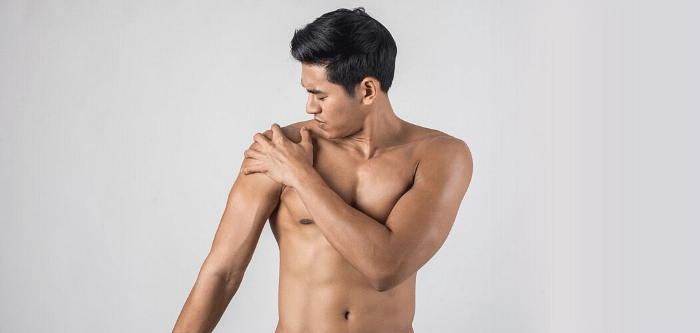
Pull-ups and rows are very effective exercises to build a strong back. However, one can engage in a variety of different back exercises like back extensions, deadlifts and pull-downs depending on their ability and fitness level.
Pain during a workout signifies that you’re straining your muscles more than you should. If you’re lifting weights, lower the load. If you expdrience pain when exercising your back and shoulders, try switching to another exercise or avoiding it for a few days.
Ensure you’re following the right technique and not putting undue stress on your muscles to prevent injury. Start with repetitions you’re comfortable with and gradually increase the count.
Although, some mild exercises are safe when recovering from an injury, it is always best to consult your doctor for the best advice on exercising after an injury.
Build a strong back through exercises like deadlifts, rows, pull-ups, and lat pulldowns. Incorporate both strength training and stretching to improve muscle tone and flexibility. Maintain proper form to prevent injury.

Your back and shoulder muscles support almost every upper body movement, whether you are lifting groceries, carrying a bag, or learning your first pull up. However, many workout routines focus mainly on the chest and arms and overlook these important muscle groups. When the back and shoulders remain weak, posture begins to suffer. Rounded shoulders, frequent neck stiffness, and a higher chance of rotator cuff problems often follow.
This guide covers 15 carefully selected exercises you can do in the gym or at home. Each movement includes clear instructions, recommended sets and repetitions, the muscles involved, and simple progressions for beginners as well as more experienced trainees. The goal is to help you build strength safely, improve posture, and train with confidence.
Before starting exercises, it helps to know which muscles you are working. Understanding this makes it easier to choose the right movements and avoid imbalances.
|
Muscle |
Where It Is Located |
Main Function |
Why It Is Important |
|
Latissimus dorsi (Lats) |
Large muscles on the sides of the mid and upper back |
Pull the arms down and toward the body |
Builds back width and improves pulling strength such as rows and pull ups |
|
Trapezius (Traps) |
From the base of the neck to the middle back |
Elevates and stabilises the shoulder blades |
Helps maintain upright posture and reduces neck strain |
|
Rhomboids |
Between the shoulder blades |
Pull the shoulder blades together |
Prevents rounded shoulders and improves posture, especially for desk workers |
|
Erector spinae |
Runs along the spine from upper to lower back |
Supports and stabilises the spine |
Important for lifting safely and preventing lower back pain |
|
Teres major and minor |
Upper outer back near the shoulders |
Assists shoulder extension and rotation |
Supports stronger pulling movements and shoulder stability |
|
Muscle |
Where It Is Located |
Main Function |
Why It Is Important |
|
Anterior deltoid (Front delt) |
Front portion of the shoulder |
Lifts the arm forward and helps in pressing movements |
Used in pushups, bench press, and everyday lifting tasks |
|
Lateral deltoid (Side delt) |
Outer side of the shoulder |
Raises the arm sideways |
Creates shoulder width and improves overhead strength |
|
Posterior deltoid (Rear delt) |
Back of the shoulder |
Moves the arm backward |
Essential for balanced shoulders and correcting posture |
|
Rotator cuff muscles (supraspinatus, infraspinatus, subscapularis, teres minor) |
Deep stabilising muscles inside the shoulder joint |
Stabilises and controls shoulder movement |
Most important muscles for preventing shoulder injuries and pain |
Back and shoulder muscles work together. If you only train shoulders, posture remains weak. If you only train back, pressing strength stays poor. So the goal is not to randomly try exercises, it is to cover three movement types:
Below are the most effective exercises you can perform either in a gym or at home. Start with basic versions and progress gradually.
Many shoulder injuries happen not during heavy lifting, but during cold starts.
Before every workout, do this 5-minute warm-up:
This activates the rotator cuff and prepares the joint.
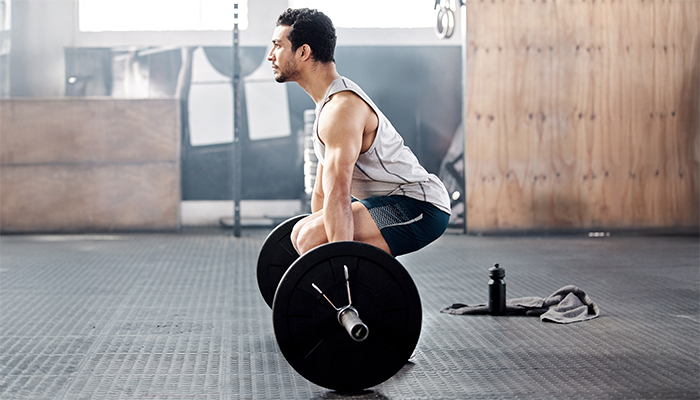
Muscles targeted: Entire posterior chain from erector spinae, lats, traps, glutes, hamstrings
Level: Intermediate
How to perform:

Muscles targeted: Lats, rhomboids, traps, rear delts, biceps
Level: Beginner to intermediate
How to perform:
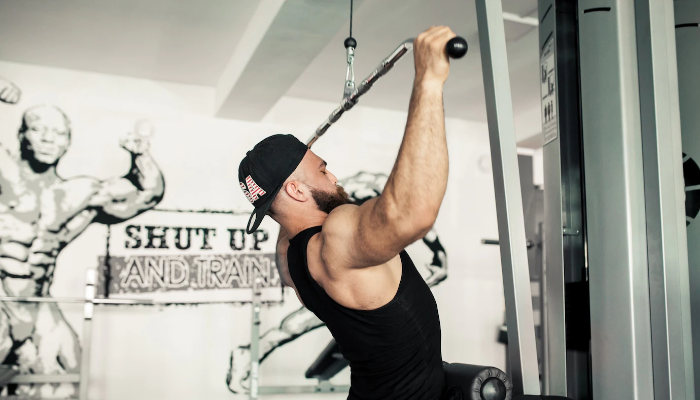
Muscles targeted: Latissimus dorsi, teres major, biceps, rear delts
Level: Beginner
How to perform:
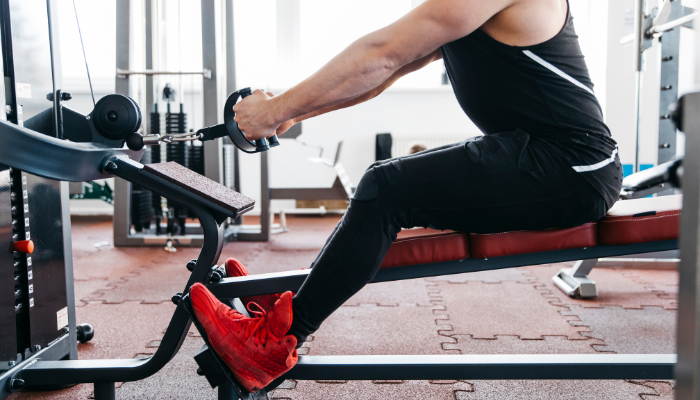
Muscles targeted: Mid-back, rhomboids, lats, traps, biceps
Level: Beginner
How to perform:
Muscles targeted: Anterior and lateral delts, upper traps, triceps, core
Level: Intermediate
How to perform:
Muscles targeted: Lateral (side) deltoid
Level: Beginner
How to perform:
Muscles targeted: Rear delts, external rotators of the rotator cuff, middle traps, rhomboids
Level: Beginner and criminally underused
How to perform:
Muscles targeted: Middle back, lats, rhomboids, traps
Level: Intermediate
How to perform:
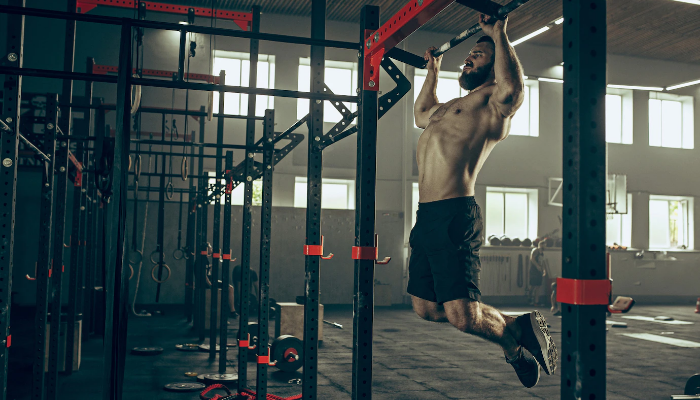
Equipment: Pull-up bar (door frame bar ~₹800–1,200)
Muscles targeted: Lats, teres major, biceps, core
Level: Intermediate
How to perform:
Equipment: Bodyweight only
Muscles targeted: Anterior and lateral delts, upper chest, triceps
Level: Beginner
How to perform:
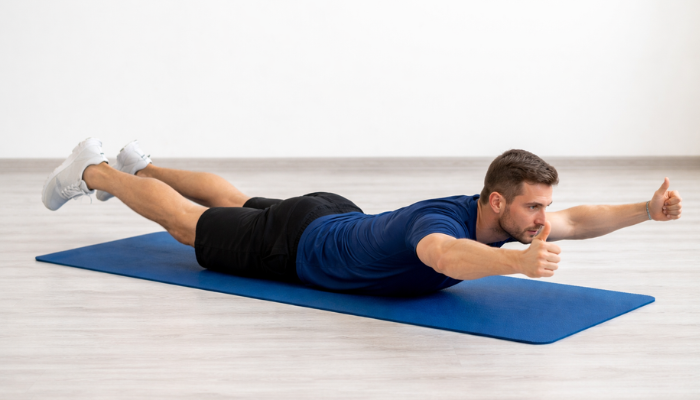
Equipment: Bodyweight only
Muscles targeted: Erector spinae, glutes, lower traps, rear delts
Level: Beginner
How to perform:
Equipment: Resistance band (anchor at door frame)
Muscles targeted: Rear delts, external rotators, mid traps
Level: Beginner
How to perform:
Equipment: Dumbbells (light weight)
Muscles targeted: Rear delts, rhomboids, mid traps
Level: Beginner
How to perform:
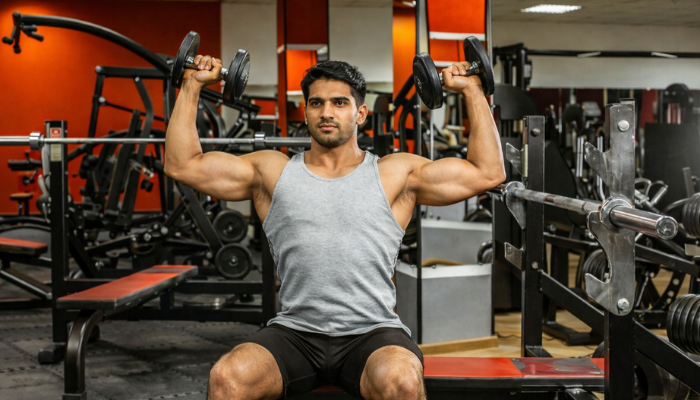
Equipment: Dumbbells
Muscles targeted: All three deltoid heads, rotator cuff
Level: Beginner to intermediate
How to perform:
Equipment: A sturdy table or low-set barbell
Muscles targeted: Upper back, rear delts, biceps, core
Level: Beginner
How to perform:
|
Day |
Focus |
Exercises |
|
Monday |
Back (Gym) |
Deadlift, Bent-Over Row, Lat Pulldown, Seated Cable Row, Face Pulls |
|
Wednesday |
Shoulders (Gym) |
OHP, Lateral Raise, Arnold Press, Face Pulls, Rear Delt Fly |
|
Friday |
Full Back & Shoulder (Home) |
Pull-ups, Pike Push-ups, Superman Hold, Dumbbell Arnold Press, Inverted Row |
|
Saturday |
Active Recovery |
Stretching, band pull-aparts, mobility work |
Building muscle requires systematically increasing the challenge over time. Follow this framework:
With consistent training (3× per week) and adequate protein intake (1.6–2.2g per kg of bodyweight):