Loading...
loading...


OMAD stands for “One Meal A Day.” It is a form of intermittent fasting where you eat all your daily calories within one eating window, usually lasting about one hour, and fast for the remaining hours of the day.
OMAD is a stricter version of intermittent fasting. While some people prefer OMAD for simplicity and faster calorie control, others find schedules like 16:8 easier to maintain long term. The better option depends on your lifestyle, energy levels, and consistency.
Weight loss on OMAD varies based on calorie intake, activity level, sleep, and food quality. Some people notice visible changes in body weight and waist size within a month, especially if they were previously overeating or snacking frequently.
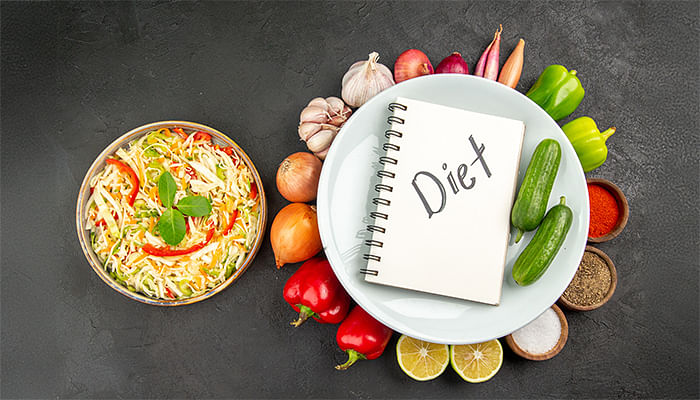
A balanced OMAD meal should include protein, fiber, healthy fats, and complex carbohydrates. Meals built around vegetables, lean protein, whole grains, fruits, nuts, and healthy fats tend to feel more satisfying and sustainable.
Your calorie needs depend on age, body weight, activity level, and fitness goals. OMAD should still provide enough nutrition and energy for your body instead of becoming an extremely low-calorie crash diet.
During the first few days, some beginners experience headaches, fatigue, cravings, irritability, or low energy while adapting to longer fasting periods. These symptoms often improve with proper hydration and gradual adjustment.
OMAD may help reduce belly fat if it creates a sustainable calorie deficit over time. However, belly fat reduction also depends on overall lifestyle factors like sleep, exercise, stress, and food quality.
Yes, black coffee without sugar or cream is generally allowed during OMAD fasting hours because it contains very few calories. Many people also drink green tea or plain water during the fasting window.

The OMAD diet has exploded in popularity because it promises something many diets fail to deliver: simplicity. Instead of constantly planning meals, counting snacks, or worrying about eating every few hours, OMAD reduces your eating schedule to one structured meal a day.
For some people, that simplicity becomes the biggest advantage. Others are drawn to OMAD because they want faster fat loss, fewer cravings, or more control over emotional eating.
But here’s the reality most people skip: OMAD is not easy in the beginning.
Going from frequent eating to fasting for most of the day can feel physically and mentally challenging if you approach it too aggressively. That’s why beginners often fail within the first week. Not because OMAD never works, but because they try to force their body into an extreme routine overnight.
The smarter approach is understanding how OMAD actually works, how to transition into it gradually, and how to make it sustainable instead of miserable.
OMAD stands for One Meal A Day, an eating pattern where you consume all your daily calories within a single one-hour window and fast for the remaining 23 hours. It is not a food-restriction diet in the traditional sense. There are no carb bans, no point systems, and no macro spreadsheets required. The only rule is timing.
This makes OMAD structurally different from most diets. You are not changing the quality of food first; you are changing the frequency. That single shift triggers a cascade of hormonal and metabolic changes that most multi-meal eating patterns simply cannot produce.
You will also see it written as the "23:1 diet," where 23 refers to the fasting hours and 1 refers to the eating window. Some people shorten it further to OMD, but the principle is identical across all three terms.
OMAD sits at the far end of the intermittent fasting spectrum. To understand where it fits, think of IF protocols as a progression. OMAD is not the starting line; it is the destination you work toward.
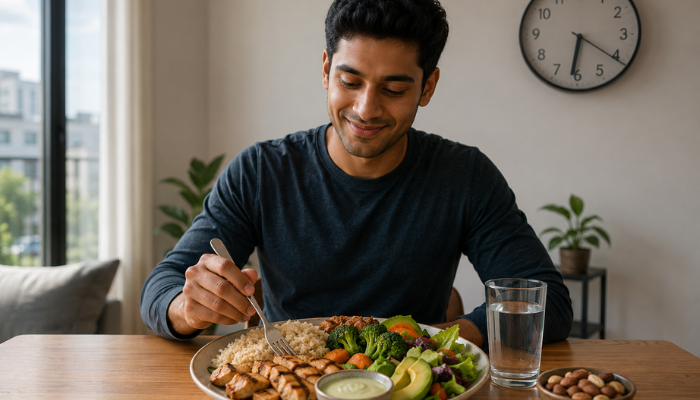
Most people don’t start OMAD because they love fasting. They start because they’re frustrated with constant dieting.
Traditional eating patterns often involve:
OMAD naturally removes many of these habits simply because there are fewer eating opportunities throughout the day.
For busy professionals, the appeal is also practical. Instead of planning multiple meals, they only focus on one satisfying meal daily.
Others try OMAD specifically for fat loss. Since eating once a day often reduces overall calorie intake, many people experience weight loss without obsessively counting every calorie.
That said, OMAD is not magic. If the one meal becomes a massive junk-food binge, results usually stall quickly.
Every time you eat, your body releases insulin to process glucose from food. Insulin is a storage hormone, and while it is elevated, fat burning is completely suppressed. By eating only once a day, you keep insulin low for roughly 22-23 hours, giving your body an uninterrupted window to access and burn stored fat.
Three additional processes are activated during the extended fast:
The caloric piece works automatically. Most people physically cannot eat more than 1,500-2,000 calories in a single sitting, which creates the daily deficit needed for weight loss without any tracking.
OMAD is not the entry point for most people, and understanding where it sits in the IF spectrum helps you decide whether to start here or work up to it.
|
IF Protocol |
Eating Window |
Fasting Window |
Best For |
|
12:12 |
12 hours |
12 hours |
Absolute beginners, lifestyle maintenance |
|
16:8 |
8 hours |
16 hours |
Most beginners, sustainable fat loss |
|
18:6 |
6 hours |
18 hours |
Intermediate fasters, faster results |
|
20:4 (Warrior Diet) |
4 hours |
20 hours |
Advanced practitioners, OMAD transition |
|
OMAD (23:1) |
1 hour |
23 hours |
Experienced fasters, maximum fat loss |
Progressing through these stages rather than jumping directly to OMAD reduces dropout risk significantly. Your hunger hormones, digestive enzymes, and energy systems all need time to recalibrate before a 23-hour fast feels manageable.
The benefits of OMAD extend well beyond the scale. Here is what consistently shows up in research and real-world experience:
This is one of the most searched OMAD questions and one of the least answered properly. The research points to late afternoon or early evening as the optimal window for most people, but each timing has specific trade-offs.
Lunch (12:00-2:00 PM): Best for metabolic efficiency
Insulin sensitivity peaks in the early afternoon, meaning your body partitions nutrients more effectively at this time. You also get the benefit of high-cortisol morning hours, when fat mobilization is naturally elevated, before you eat. The practical downside is fitting a full, structured meal into a typical workday lunch break.
Dinner (6:00-8:00 PM): Most sustainable long-term
Eating dinner aligns OMAD with social life, family meals, and Indian eating culture. You fast through the day, eat a complete meal in the evening, and wake up already 10-12 hours into your next fast. Community data consistently shows dinner OMAD has the highest adherence rates because it creates the least friction with daily social routines.
Breakfast (8:00-9:00 AM): Least recommended for most
Eating breakfast means your eating window closes by 9 AM, requiring you to fast through the most socially active parts of the day including lunch meetings, office culture, and evenings. For early-morning gym-goers who want immediate post-workout nutrition, this can work, but it demands significant social adjustments.
Bottom line: If long-term sustainability is your priority, dinner OMAD wins. If metabolic optimization is the goal, a late lunch window around 1-3 PM is the research-backed choice.
The most sustainable approach is a 3-week transition, not a cold-turkey start.
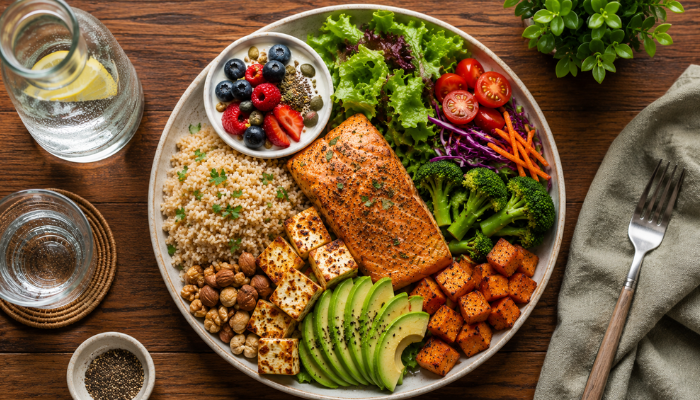
Your one meal needs to deliver an entire day's nutrition in a single sitting. Approach it as a structured plate with deliberate macronutrient targets.
Target macro distribution for a 1,500-2,000 calorie OMAD meal:
|
Component |
Target |
Purpose |
|
Protein |
100-130g (1.6g per kg bodyweight) |
Prevents muscle loss, sustains satiety |
|
Non-starchy vegetables |
40% of plate by volume |
Fiber, micronutrients, gut health |
|
Healthy fats |
20-25% of calories |
Hormonal function, fat-soluble vitamins |
|
Complex carbohydrates |
10-20% of calories |
Energy, mood stability, thyroid function |
Best foods to include:
Foods to avoid in your OMAD meal:
Most OMAD guides are not designed for Indian vegetarians. Here is a practical week of meals tailored to Indian food culture:
|
Day |
Main Dish |
Side |
Primary Protein |
|
Monday |
Rajma chawal (brown rice) |
Mixed salad + raita |
Kidney beans |
|
Tuesday |
Paneer tikka with multigrain roti |
Dal + sabzi |
Paneer |
|
Wednesday |
Moong dal khichdi |
Roasted vegetables + curd |
Moong dal |
|
Thursday |
Chana masala + brown rice |
Cucumber salad + nuts |
Chickpeas |
|
Friday |
Tofu stir-fry with quinoa |
Spinach + tomato salad |
Tofu |
|
Saturday |
Egg curry + multigrain roti |
Mixed dal + green sabzi |
Eggs |
|
Sunday |
Palak paneer + brown rice |
Mixed nuts + fruit bowl |
Paneer + nuts |
For vegetarians hitting protein targets, Indian lentils, paneer, and chickpeas are your foundation. Add a small handful of mixed seeds or nuts to every meal to cover healthy fats, zinc, and magnesium that are commonly low in plant-based OMAD meals.
This is the section most OMAD guides skip entirely, and it is the one you need most before you start. Here is an honest, phase-by-phase breakdown of what to expect.
Your hunger hormone, ghrelin, is programmed to spike at your usual meal times. Day 1 does not just feel like skipping lunch; it feels like your body is actively protesting. Headaches, dizziness, irritability, and intense cravings are all normal responses during this window. Staying hydrated helps manage these early hunger spikes, as does keeping yourself occupied during old meal times. Black coffee and herbal teas are your best tools here.
Around Day 4, the sharp ghrelin spikes begin to flatten. Insulin has stabilized enough that your body starts accessing fat stores more reliably, and energy becomes more even rather than crashing in the afternoon. This is also when initial water weight begins to drop, often 1-2 kg in the first week. You may still feel some hunger, but it becomes manageable and less urgent.
By Week 2, OMAD stops feeling like deprivation and starts feeling like a rhythm. Hunger spikes flatten almost entirely for most followers. Energy during fasted hours becomes more stable and mental focus sharpens noticeably as the body becomes efficient at running on stored fuel. Real fat loss, distinct from water weight, kicks in during this phase. Most people lose 500g-1 kg of actual body fat per week when their OMAD meal is nutrient-dense. Sleep quality and mood stability also tend to improve during this phase as cortisol patterns normalize.

Real results vary based on starting weight, meal quality, activity level, and consistency. Here is what the data and community experiences collectively show:
One pattern consistently reported across Reddit communities and structured studies: the first 10 days show the fastest scale movement (mostly water), followed by a plateau around Days 10-14, and then steady fat loss in the final two weeks. Do not use the daily scale as your only metric. Track waist measurements weekly. It is a far more reliable indicator of true fat loss, independent of water retention or digestion variables.
Maintaining workout performance while eating once a day is fully possible, but the timing of your training relative to your meal window makes a significant difference.
What research shows:
Fat loss (cardio, HIIT, yoga, brisk walking):
Train in the fasted state, then eat your OMAD meal within 1-2 hours post-workout. You get enhanced fat oxidation during the session and peak insulin sensitivity for nutrient absorption immediately after.
Strength training (weights, resistance):
Train within 90 minutes before or immediately after your eating window. Post-workout is when muscle protein synthesis is highest, so eating directly after a strength session maximizes recovery. Avoid training more than 3-4 hours after your meal, as depleted glycogen significantly hurts heavy compound lift performance.
Practical OMAD + workout schedule options:
OMAD is not appropriate for everyone, and recognizing the risks helps you manage them or make an informed decision against starting.
Common side effects, especially in the first two weeks:
Who should not follow OMAD:
If you fall into any of these categories, a 16:8 protocol is a safer and still effective alternative. Always speak with a healthcare provider before starting an extreme fasting regimen.
No OMAD guide covers this, and it is one of the most important parts of the entire protocol. Stopping OMAD abruptly leads to digestive discomfort, bloating, and rapid rebound weight gain for a predictable reason: your digestive system has adapted to processing one large meal, and your hunger hormones have recalibrated to a single daily spike. Reversing that overnight overwhelms both systems.
OMAD can be an effective way to simplify eating habits and improve calorie control, especially for people who struggle with constant snacking or inconsistent meal timing. But like any nutrition strategy, results depend on how sustainably you follow it.
The people who see long-term success with one meal a day usually focus on balance rather than extremes. They prioritize nutrient-dense meals, proper hydration, quality sleep, and regular physical activity instead of trying to starve themselves for quick results.
That’s also why combining nutrition with movement matters so much. Following OMAD while staying active through strength training, yoga, cardio, or sports can help improve energy levels, recovery, and overall consistency.
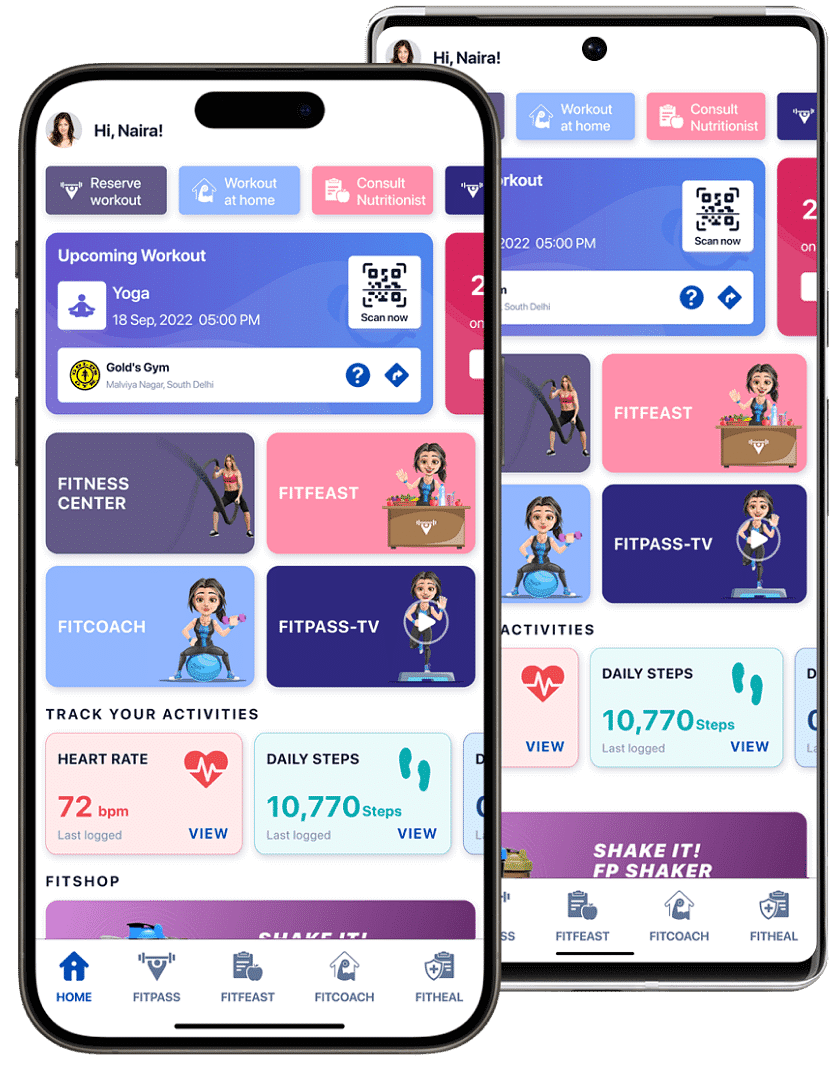
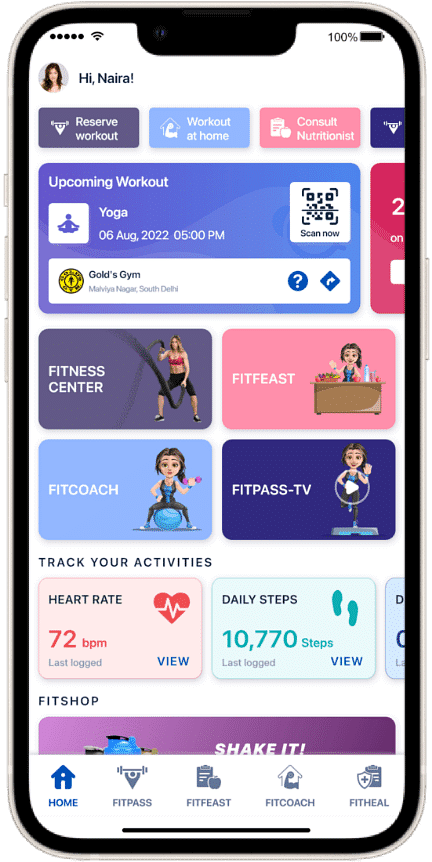
FITPASS makes this easier by giving you access to multiple fitness options under one membership, whether you prefer gym workouts, yoga classes, swimming, or group training sessions. Alongside that, FITFEAST can help you stay more mindful about your nutrition choices and daily eating habits while following fasting routines like OMAD.
At the end of the day, the best diet is the one you can follow consistently without feeling miserable. OMAD may work well for some people, while others may feel better with a more flexible intermittent fasting schedule. The key is building a routine that supports both your health goals and your lifestyle.