Most people train their abs with endless crunches and planks but still struggle to build a strong, defined core. One common reason is that the obliques, the muscles along the sides of your abdomen, are often overlooked.
These muscles help your body rotate, bend sideways, and stabilize the spine during everyday movement. Without strong obliques, the core cannot function effectively, and many traditional ab exercises fail to train the torso in the way it naturally moves.
The good news is that you do not need complicated equipment to strengthen them. With the right side abs workout, you can build stronger obliques at home also.
In this guide, you will learn what the oblique muscles do, why obliques workouts matter for core strength, and the most effective oblique exercises you can add to your routine.
What Are Obliques? Understanding the Oblique Muscle
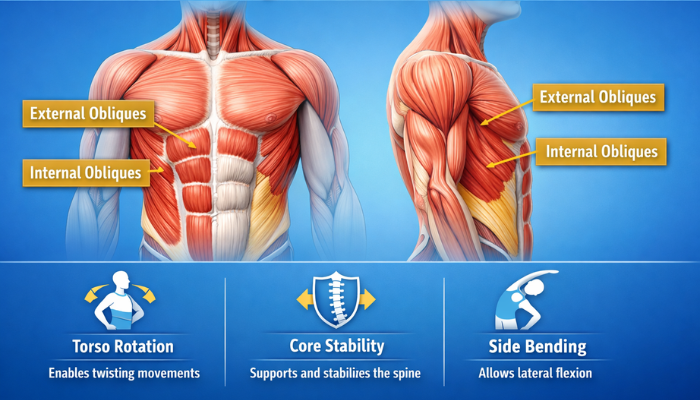
The oblique muscles are located on the sides of your abdomen. They form an important part of the core muscle group. There are two main types of oblique muscles:
External obliques
These muscles run diagonally along the outer sides of the abdomen. They help rotate the torso and assist with bending the body sideways.
Internal obliques
These lie beneath the external obliques and provide additional stability to the core. They help control twisting and bending movements of the spine.
Together, these two layers of the oblique muscle form a natural "corset" around your midsection. When you rotate your torso, bend sideways, draw your belly in, or stabilize your spine under load, your obliques are doing the majority of the work. No other muscle group in your core performs this many critical functions simultaneously.
Why You Need a Dedicated Obliques Workout
Here is why adding a structured side abs workout to your weekly training routine is important.
- Spinal protection
Strong obliques act as a stabilizing brace during lifting, bending, and twisting. This support helps reduce stress on the lumbar spine and lowers the risk of lower back injuries.
- Better posture
The oblique muscle group helps keep the pelvis in a neutral position. This improves posture and reduces problems such as slouching or excessive forward pelvic tilt.
- Athletic power
Many sports rely on rotational strength. Activities like tennis, cricket, football, and swimming generate power from the obliques during twisting and turning movements.
- Core stability during heavy lifts
A strong oblique muscle helps create internal pressure in the abdomen that supports the spine during demanding exercises such as squats and deadlifts.
- Defined waistline
Training the side abs strengthens the muscles along the sides of the torso, helping create better muscle definition around the waist.
- Functional strength for daily movement
Simple activities like carrying groceries, turning to reverse a car, or lifting a child all require strong and stable obliques.
Best Side Abs Exercises to Strengthen Your Obliques
The following side abs exercises target the oblique muscles and help build a stronger core. Most of them can be performed at home without specialized equipment.
1. Side Crunches Exercise
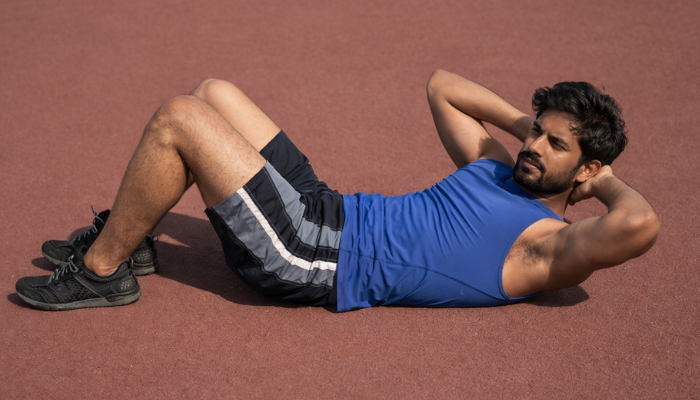
The side crunches exercise is the most accessible entry point for building the oblique muscle. It isolates the external oblique through a short range of lateral flexion. This exercise is perfect for beginners building mind-muscle connection with their side abs.
How to do it:
- Lie on your back with knees bent and feet flat on the floor
- Place both hands loosely behind your head, do not pull on your neck
- Engage your core and tilt both knees to the right side at a 45-degree angle
- Exhale and crunch your left shoulder toward your left hip, lifting your shoulder blade off the floor
- Hold at the top for one second, squeezing your left oblique
- Slowly lower back down and complete all reps on one side before switching
2. Oblique Crunches
Oblique crunches are one of the most searched and most effective side abs exercises for building lateral core definition. Unlike basic crunches that target the rectus abdominis (the "six-pack" muscle), oblique crunches create direct mechanical tension on the side abs through diagonal movement.
How to do it:
- Lie flat on your back, knees bent, feet hip-width apart on the floor
- Place your right hand behind your head and extend your left arm flat on the floor for support
- Exhale and lift your right shoulder diagonally toward your left knee. Your elbow should move toward the opposite knee, not straight up
- Squeeze your right oblique at the top for a full second
- Slowly lower under control and avoid dropping your shoulder back to the floor with momentum
- Complete all reps on the right side, then switch
3. Standing Side Bend
The standing side bend is one of the most practical oblique exercises because it trains the side abs through a natural side-bending movement. This is the same movement pattern used in everyday activities such as reaching to the side or carrying objects in one hand.
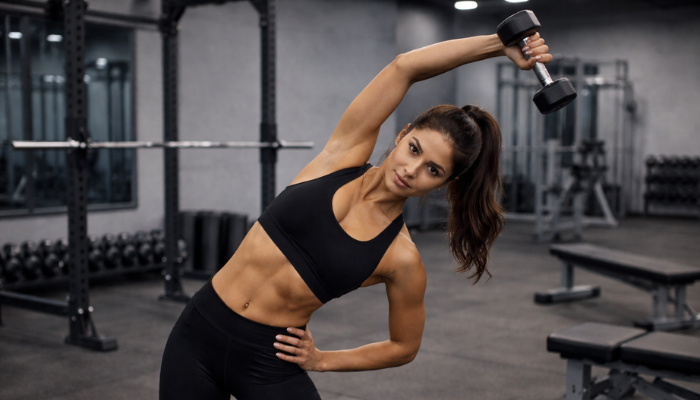
How to perform the standing side bend
- Stand upright with your feet shoulder-width apart and keep your core engaged.
- Hold a dumbbell in your right hand, or perform the exercise using bodyweight only.
- Place your left hand on your hip for balance.
- Slowly bend your torso to the right side while sliding the dumbbell down your thigh.
- Lower only as far as you can while keeping your torso facing forward. Avoid rotating your body.
- Engage your left oblique muscles to return to the starting position. Do not use momentum.
4. Dead Bug with Rotation
The dead bug with rotation is a low-impact oblique exercise that strengthens the core while improving stability and control during movement. It is especially useful for people who want to train the side abs and oblique muscles without putting excessive strain on the lower back.
How to perform the dead bug with rotation
- Lie on your back with your arms extended straight toward the ceiling.
- Bend your knees at a 90-degree angle so your legs are in a tabletop position.
- Press your lower back gently into the floor and keep it stable throughout the movement.
- Slowly lower your right arm overhead while extending your left leg toward the floor.
- Return to the starting position and slightly rotate your torso, reaching your right hand toward your left knee.
- Repeat the movement on the opposite side while maintaining a slow and controlled rhythm.
5. Side Plank
The side plank is one of the most effective oblique exercises for strengthening the side abs and improving core stability. This exercise trains the oblique muscles to support the body and resist bending sideways, which helps protect the spine during daily movement and physical activity.
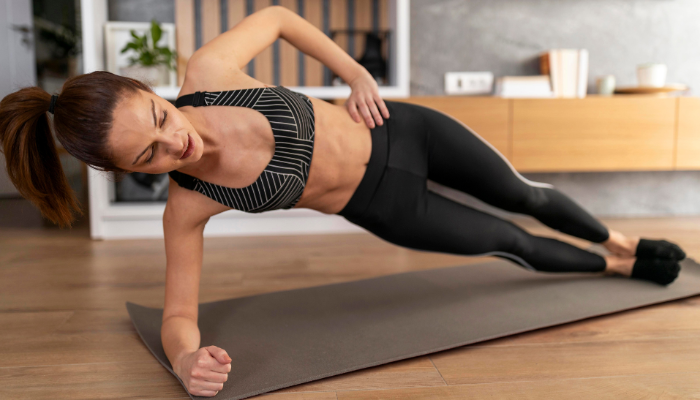
How to perform the side plank
- Lie on your right side with your right forearm on the floor. Keep your elbow directly beneath your shoulder.
- Stack your feet on top of each other, or place one foot slightly in front of the other for better balance.
- Lift your hips off the floor until your body forms a straight line from your head to your feet.
- Keep your core engaged and avoid letting your hips drop or rotate forward.
- Maintain steady breathing while holding the position.
- Lower your hips slowly back to the floor and repeat on the other side.
6. Russian Twist
The Russian twist is a highly effective oblique exercise that strengthens the side abs through controlled rotational movement. This exercise activates both the internal and external oblique muscles, helping improve core stability and rotational strength.
How to perform the Russian twist
- Sit on the floor with your knees bent and feet flat on the ground. Beginners can keep their feet on the floor, while intermediate users may raise their feet slightly off the ground.
- Lean your torso back until it forms roughly a 45-degree angle with the floor. Keep your spine straight and avoid rounding your back.
- Clasp your hands together or hold a light weight in front of your chest.
- Rotate your torso to the right and move your hands toward the floor beside your right hip.
- Return to the center position, then rotate your torso to the left side. This completes one repetition.
- Continue the movement in a slow and controlled rhythm without swinging your upper body.
7. Bicycle Crunch
The bicycle crunch is widely considered one of the most effective side abs exercises for strengthening the oblique muscles and the front abdominal muscles. This exercise combines a twisting movement with a cycling motion, which helps activate the obliques and rectus abdominis at the same time.
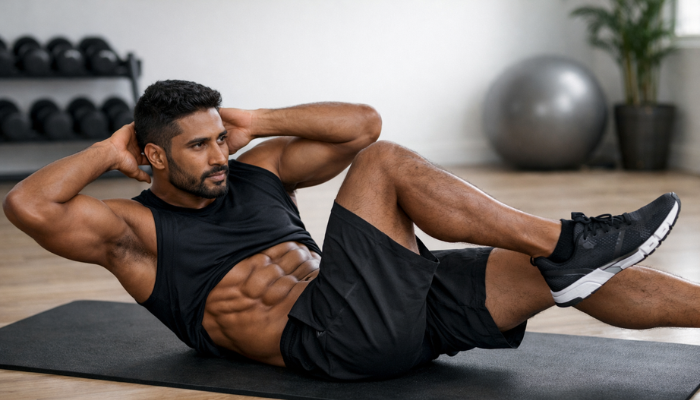
How to perform the bicycle crunch
- Lie on your back with your hands placed lightly behind your head. Lift your shoulders slightly off the floor and engage your core.
- Bring your right knee toward your chest while extending your left leg straight out.
- Rotate your torso so that your left elbow moves toward your right knee. Focus on engaging the left oblique muscles.
- Switch sides by extending the right leg while bringing the left knee toward your chest.
- Rotate your right elbow toward the left knee.
- Continue alternating sides in a smooth, controlled cycling motion.
8. Woodchop (Cable or Resistance Band)
The woodchop is a highly effective oblique exercise that strengthens the side abs through controlled rotational movement. It closely mimics natural twisting actions used in activities such as throwing, swinging, or turning the body, making it a functional exercise for training the oblique muscles.
How to perform the woodchop
- Attach a resistance band to a high anchor point such as a door frame, rack, or cable machine.
- Stand sideways to the anchor point with your feet shoulder-width apart.
- Hold the band with both hands and extend your arms upward toward the anchor at a diagonal angle.
- Pull the band diagonally downward across your body while rotating your torso, similar to the motion of chopping wood.
- Allow your hips to rotate slightly while keeping your arms extended throughout the movement.
- Slowly return to the starting position while controlling the resistance of the band.
9. Side Abs Exercise: Starfish Crunch
The starfish crunch is an underrated side abs exercise that targets both the obliques and hip abductors simultaneously, while also challenging shoulder stability.
How to do it:
- Lie flat on your back with arms and legs spread wide in a star shape
- Lift your right arm and left leg simultaneously, reaching your right hand toward your left foot in a diagonal crunch
- Hold the top position for one second, squeezing your left oblique and right hip
- Lower slowly and repeat on the opposite side (left arm to right foot)
10. Ab Wheel Rollout with Lateral Reach
The ab wheel rollout with lateral reach is an advanced oblique exercise that strengthens the core while challenging the side abs. By adding a slight side movement during the rollout, this exercise increases the demand on the oblique muscles, helping improve core stability and control.
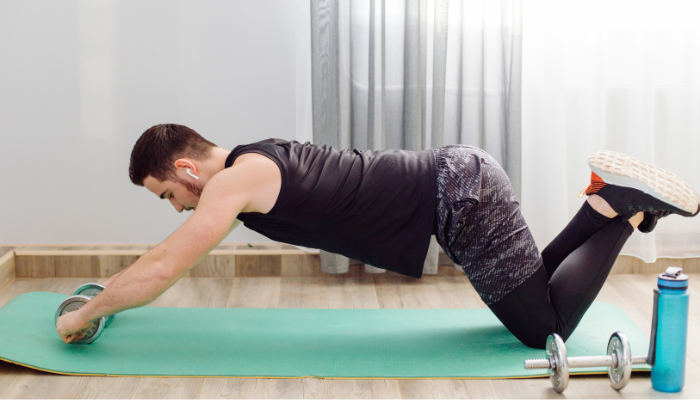
How to perform the ab wheel rollout with lateral reach
- Kneel on a mat and hold the ab wheel with both hands positioned directly below your shoulders.
- Engage your core and slowly roll the wheel forward while keeping your back straight.
- Extend your body forward until your torso is close to parallel with the floor.
- At full extension, gently move the wheel slightly to the right to activate the left oblique muscles.
- Bring the wheel back to the center position.
- Pull the wheel back toward your knees to return to the starting position.
- Alternate sides during each rollout.
11. Copenhagen Plank
The Copenhagen plank is an advanced oblique exercise that strengthens the side abs while also activating the inner thigh muscles and hip stabilizers. This movement challenges the oblique muscles to support the body in a side plank position, making it a powerful exercise for improving lateral core strength and stability.
How to perform the Copenhagen plank
- Place a bench, sturdy box, or elevated platform beside you.
- Lie on your side and position your top foot on the edge of the bench.
- Place your forearm on the floor with your elbow directly under your shoulder.
- Lift your hips off the floor so your body forms a straight line from head to foot.
- Raise your bottom leg off the floor so that your forearm and top foot are the only points touching the ground or bench.
- Hold the position while keeping your core engaged and your body aligned.
Common Mistakes to Avoid in Your Side Abs Workout
Even effective oblique exercises can produce poor results if they are performed incorrectly. Avoid these common mistakes to get the most out of your side abs workout.
1. Pulling on the neck during oblique crunches
Many people pull their head forward while performing crunches. This shifts the effort away from the side abs and places unnecessary strain on the neck. Keep your hands relaxed and focus on lifting with your core muscles instead.
2. Mixing rotation and side bending
Exercises such as side crunches are designed to train a side-bending movement. Rotating the torso instead of bending sideways reduces the engagement of the oblique muscles and limits the effectiveness of the exercise.
3. Moving too quickly
Fast, momentum-driven repetitions reduce muscle activation. Perform each oblique exercise slowly and with control so the side abs remain engaged throughout the movement.
4. Training one side more than the other
Uneven training can create strength imbalances between the left and right sides of the core. Balanced obliques workouts help maintain proper posture and stable movement patterns.
5. Skipping a proper warm-up
Beginning intense rotational movements without warming up can increase the risk of muscle strain. A short warm-up that activates the core prepares the oblique muscles for exercise and improves performance.
Conclusion
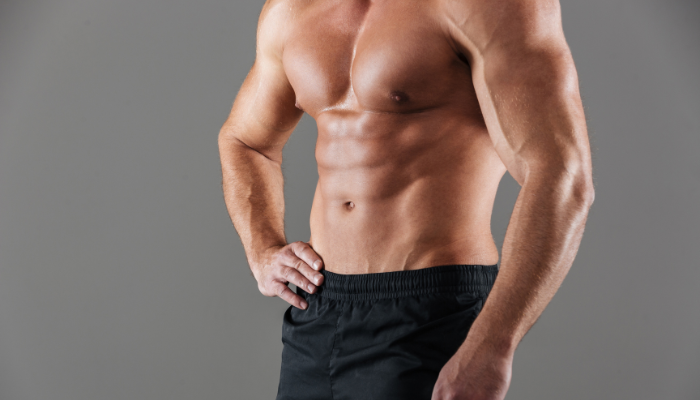
Your obliques are often one of the most overlooked muscles in core training, yet they play a crucial role in supporting everyday movement, balance, and overall core strength. Building stronger oblique muscles helps improve stability, posture, and the body’s ability to twist and bend efficiently.
Start with beginner-friendly oblique exercises, focus on proper form, and gradually progress to more challenging side abs workouts as your strength improves.
Whether your goal is to enhance core stability, support athletic performance, or build stronger side abs, adding a consistent obliques workout to your routine can make a meaningful difference in your overall fitness.