The ease with which you can do certain exercises defines whether you are ageing gracefully or aggressively.
Want to test your physical age?
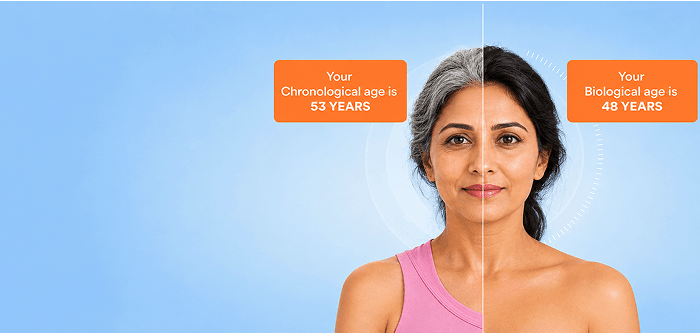
The physical age or biological age reflects cellular damage, metabolic function, and organ efficiency. This is different from your chronological age (as per birthday). Your physical age may be different from your chronological age as you know it. A full-body HIIT workout is one of the best ways to check your physical age and keep it going at a good pace.
We love to go over topics like these because they are a light-hearted reminder to stay fit, regardless of a busy lifestyle. This blog is for people who like to keep tabs on their fitness and longevity.
What is Your Physical Age?
"Just wait till you are my age." Anytime you hear this, it's a reminder to stay consistent with your fitness routine. Take it as a sign to never give up on your fitness progression. Here is what your physical age depends on:
- fitness level
- dietary habits
- lifestyle habits
Now and then, you may notice that some people look younger than their actual age. “You really do not look 50” is seen as a positive compliment for someone who looks healthy and active for their age. The thing is, two people can be 50, yet one may have a different kind of glow. Some people look healthier and give off the energy of someone much younger than their age. Biological age and diet play a big factor here. Many people confuse biological age with physical age.
Let’s take a look at this difference between chronological age vs physical age.
Chronological Age vs Physical Age
|
Basis
|
Chronological Age
|
Biological Age
|
|
Meaning
|
Chronological age is based strictly on your calendar birthday. It never changes or slows down.
|
Biological age is based on your physical health, cellular damage, and how well your organs work.
|
|
Difference
|
Chronological age increases as per your birth year.
|
Your biological age can be higher or lower than your actual calendar age depending on habits.
|
|
Impact of habits
|
Your habits do not change your chronological age.
|
Smoking, high stress, poor diet, lack of fruits and essential vitamins may increase biological age. On the other hand, consuming a healthy diet, sleeping well, and exercising are known to lower your biological age.
|
Can You Do the Single-Leg Balance Test
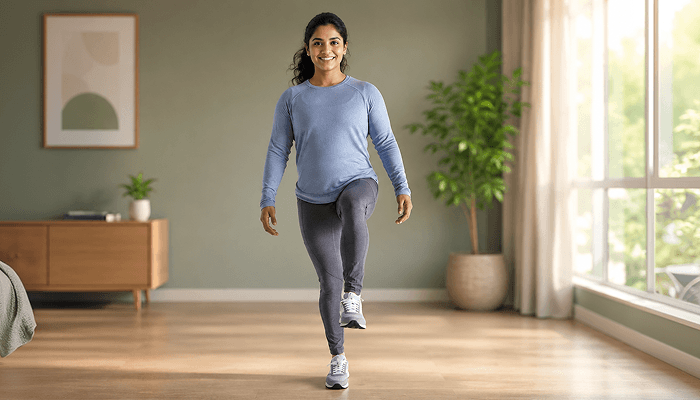
The single-leg balance test shows healthy neuromuscular function in adults.
You might be able to do this very easily during childhood. While it seems easy, most people trip over after a few seconds. Having an active lifestyle over the years is the biggest reason for loss of stability. Find out what your biological age is with the following table.
|
Single-Leg Hold Duration
|
What it Says About Your Physical Age
|
|
30 sec or longer
|
30-29 years old
|
|
20 to 29 sec
|
35 to 49 years old
|
|
10 to 19 sec
|
55 to 65 years old
|
|
5 to 10 sec
|
65+ years old
|
VO₂ Max and What it Says About Your Physical Age
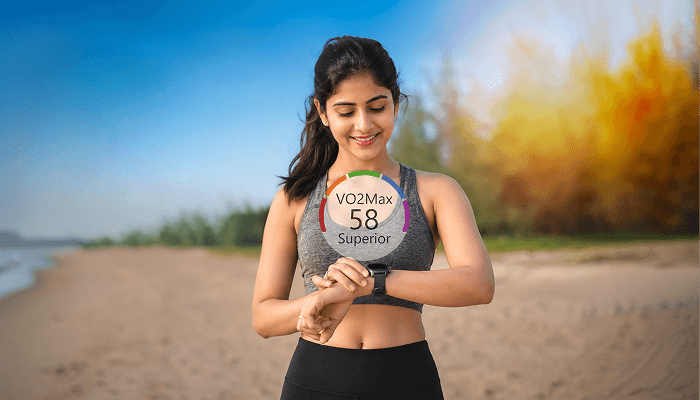
The physical age is one of the top predictors of longevity and health. If you can successfully pass the single-leg balance test, then boosting your VO2 max is the next step for you. Simple 30-minute HIIT workouts are among the best ways to maintain a healthy physical age.
|
Basis
|
SpO₂
|
VO₂
|
|
What is it?
|
Blood oxygen saturation
|
Maximum oxygen uptake during the HIIT workouts
|
|
Definition
|
The percentage of oxygenated haemoglobin in your blood relative to total haemoglobin.
|
The maximum volume of oxygen your body can use per minute during intense exertion.
|
|
Ideal Readings
|
An ideal SpO₂ level is between 95% and 100% for most healthy individuals.
|
When it comes to VO₂ max, there is no ideal score, as it depends on age, sex and fitness level.
|
|
Measuring
|
oximeters
|
smartwatches or specialised lab masks during a graded exercise |
Standard Physical Performance Markers of Age
The single-leg balance test is a common parameter to check the physical age of a person. However, physical performance markers include many more tests, such as the following, as well as other stability tests.
- Grip strength test: Measures hand and forearm power, indicating overall muscle strength, functional ability, and biological age.
- Sitting-rising test: Assesses floor sit-to-stand ability, reflecting lower-body strength, balance, flexibility, and how well you’re ageing.
- Push-up capacity test: Evaluates upper-body muscular endurance with age-based norms to indicate functional fitness and physical age.
How do Full-Body HIIT Workouts Improve Biological Age
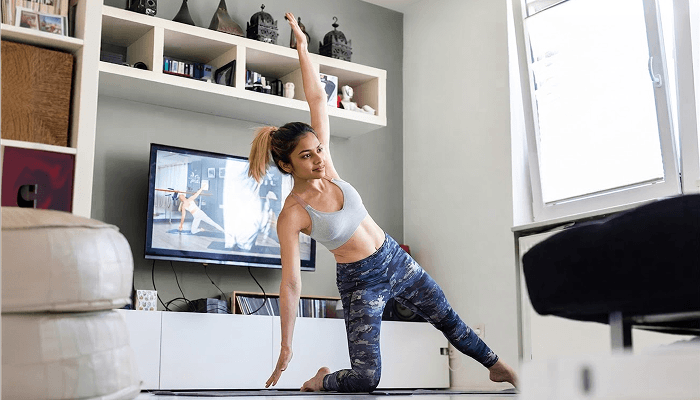
High-intensity interval training (HIIT) lowers your physical age by improving you from within. It improves your cellular health, specifically by:
- boosting mitochondrial function
- increasing aerobic fitness (VO₂ max)
- preserving muscle mass
HIIT stimulates the production of human growth hormone (HGH) in the body. This is the main reason why a full-body HIIT workout helps. This hormone plays an important role in cell repair, muscle growth, and overall longevity.
30 Minute HIIT Workout to Test Your Physical Age
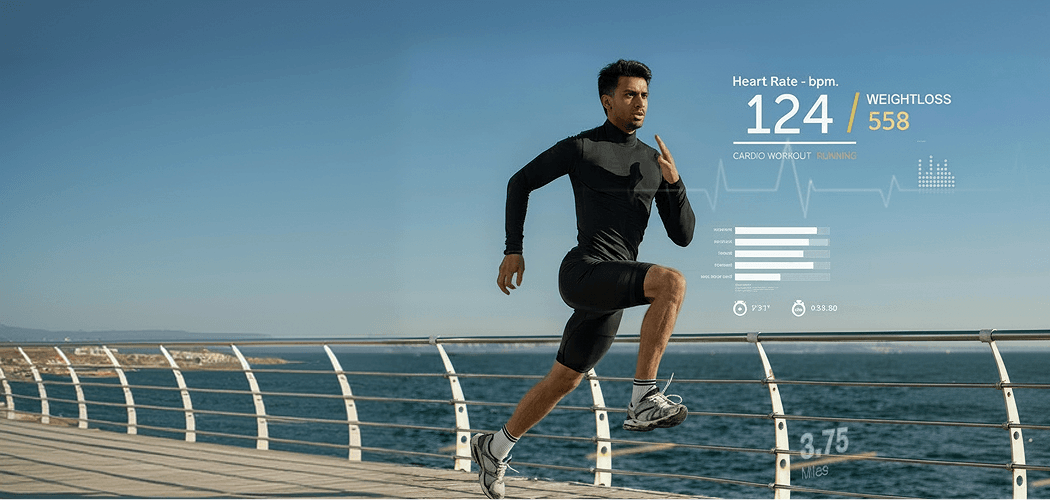
Faster heart rate recovery signals a younger cardiovascular system.
Take it as a sign during your HIIT workout. This session challenges your VO₂ max, functional strength, mobility, and recovery, which are the key markers of physical age. Track peak heart rate and how fast it drops in recovery. Keep in mind the following things while evaluating your workout.
- Count clean reps with good form in each interval
- Note any breakdown.
- Observe breath recovery
- Observe speed between rounds
- Check overall movement quality (squat depth, plank stability, lunge control).
- Compare your performance to age-based norms to estimate physical age.
Equipment Needed
- Timer (phone or watch)
- Open floor space
- Optional: dumbbells or a backpack for added resistance
30-Minute Structure
- Warm-up: 5 minutes
- Main HIIT block: 20 minutes (4 rounds of a 5-minute circuit)
- Cool-down + mobility: 5 minutes
Warm-Up (5 Minutes)
Goal: Raise heart rate and loosen hips, shoulders, and spine.
- March in place or light jog
- Arm circles (forward + backward)
- Bodyweight squats
- Torso twists
Main HIIT Workout Block (20 Minutes)
Format: 4 rounds of a 5-minute circuit
Work: 40 seconds per exercise
Rest: 20 seconds between exercises
Rest between rounds: 1 minute
The HIIT Workout Circuit
Complete all 5 exercises back-to-back. Then rest for 1 minute after exercise 5, then start the next round (4 rounds total).
- Pencil Squat or Air Squat: Stand hip-width apart, sit back like into a chair, chest up, knees tracking over toes; test depth and control.
- Alternating Reverse Lunge: Step back, drop knee toward floor, and keep front knee behind toes; test balance and leg strength.
- Push-Up (knees, incline, or full): Hands under shoulders, body straight, chest just above floor; count clean reps for upper-body strength.
- Mountain Climbers: High plank, drive knees to chest alternately, and keep hips low; test core endurance and cardio capacity.
- Star Jumps or Fast Squat Jumps: Squat, explode up with arms overhead, and land softly; test power, coordination, and leg strength.
Cool-Down + Mobility (5 Minutes)
Hold each for 30–45 seconds and breathe deeply. The goal is to bring heart rate down, reset posture, and check how your body feels after high effort.
- Standing forward fold (hamstrings, lower back)
- Hip flexor stretch (lunge position)
- Child’s pose or seated forward fold
- Chest opener (hands behind back, lift chest)
- Neck and shoulder rolls
How to “Score” Your Physical Age
- How clean were your push-ups across all rounds? (compare to age/sex norms).
- Could you maintain squat depth, control and form in all rounds?
- Measure peak heart rate recovery in rounds 2–3. Check how much it drops in 1 minute of rest. Faster drop = Better cardiovascular fitness.
- Note how many seconds it takes to feel “normal” after each round to check breath recovery
- Any joint pain, major form breakdown, or inability to complete intervals?
Use these performance markers alongside standard tests (grip strength, sitting-rising test, and push-up capacity) to estimate whether your biological age is younger, on par, or older than your chronological age. Repeat this workout every 4–6 weeks to track improvements in VO₂ max, SpO₂, grip strength, and heart rate recovery, which are key signs of slowing or reversing biological ageing.
Reverse Ageing Exercises

Many fitness folks across the globe agree that regular exercise, jogging warm-ups and HIIT workout routines are a powerful tool for reversing cellular ageing and boosting longevity.
- Cellular rejuvenation: HIIT workouts boost mitochondrial protein synthesis by increasing their volume and density. This is what reverses cellular ageing. This enhances muscle repair in adults and slows age-related decline.
- Heart health: HIIT workouts reduce blood pressure and resting heart rate in adults. This improves cardiac structure and reduces cardiovascular risk across palpitations.
- Strength and Metabolism: HIIT offers muscle protection as it burns body fat while keeping your lean muscle safe.
- Raises VO₂ max: This is a sign of a healthy body and lungs.
|
Looking for HIIT workout routines online for free?
Get access to full-body HIIT workouts from the leading fitness coaches across the globe on FITPASS TV.
Try HIIT Tabata, HIIT Cardio, HIIT Mountain Burn, LA30 HIIT, Boxing HIIT, Intense Full-Body Strength HIIT and many more expert-led sessions to let you train anytime, anywhere with FITPASS memberships.
|
The Bird’s Eye Perspective
Your chronological age (birthday) has got nothing to do with your physical age, which is your body’s actual biological age. Looking through a broader lens, you could be 30 with the metabolism of a 50-year-old if you lead an unhealthy lifestyle. On the other hand, if you stay active, you have a better chance at longevity and long term mobility which is a true marker of biological age.
Download the FITPASS app to access the best workout videos on FITPASS TV and learn from the best.