When it comes to meeting our daily fruit intake, many of us face a common dilemma: Should we eat whole fruits or drink fruit juices? On the surface, they seem interchangeable; both come from fruits and offer similar flavours. But are they nutritionally the same? The debate between whole fruits vs juice goes beyond convenience and taste. It’s about how your body responds, how much sugar you’re consuming, and what nutrients you may be gaining or losing.
Let’s explore the difference between fruit and fruit juice, their health benefits, and the best way to consume fruits for health.
- Whole fruits contain more fibre than juice, which supports digestion and blood sugar control.
- Juices often have higher sugar content, especially if packaged, with reduced satiety and nutrient density.
- Studies show that whole fruits are linked to reduced disease risk, while excess juice consumption can increase health risks.
- Packaged juices are processed, often containing additives, unlike fresh fruits, which are whole foods.
- For long-term health, whole fruits are generally the better choice.
At the heart of this debate lies the nutritional value. Whole fruits such as apples, oranges, berries, and bananas are natural powerhouses of vitamins, minerals, antioxidants, and dietary fibre. They're low in calories, high in water content, and contribute to satiety, making them a smart choice for healthy snacking or meal additions.
On the other hand, fruit juices, especially packaged ones, go through processing that removes the majority of fibre and sometimes strips away essential nutrients. Even freshly squeezed juice, while more natural, still lacks the fibre that whole fruits provide.
The difference between fruits and fruit juice becomes more evident when you look at their impact on blood sugar levels, digestion and metabolic health.
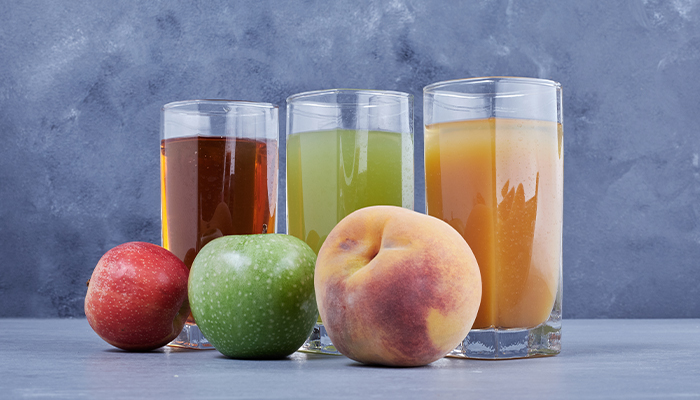
Fibre is one of the key distinctions between whole fruit and juice. It plays a vital role in maintaining healthy digestion, preventing constipation, and stabilising blood sugar.
When you consume whole fruits, the natural fibre slows down the release of sugar into your bloodstream, helping prevent insulin spikes. In contrast, when fruits are juiced, the fibre is removed, allowing sugar to hit your system more rapidly.
A 2013 Harvard study found that people who consumed more whole fruits, particularly blueberries, apples, and grapes, had a lower risk of developing type 2 diabetes. In contrast, those who drank more fruit juice had a higher risk.
Clearly, fibre isn’t just a bonus; it’s a critical part of what makes whole fruits healthy.
Another major difference is the concentration of sugar. While fruits do contain natural sugar, these are balanced by fibre and water content. Juice, however, often contains as much sugar as soft drinks, especially if they are processed or have added sweeteners.
For example, drinking a glass of orange juice might require 3-4 oranges. But would you ever sit and eat 4 oranges at once? Probably not. With juice, you get all the sugar but none of the chewing effort, fibre, or satiety.
According to the British Nutrition Foundation, even unsweetened fruit juice contributes to your daily sugar intake and should be limited to 150ml per day.
So, when it comes to sugar content in juice vs fruit, juice clearly comes out higher, which may not be ideal if you're watching your sugar intake or managing diabetes.
Let’s take a quick look at how whole fruits stack up in terms of nutrition:
| Fruit |
Fibre (per 100g) |
Natural Sugar (per 100g) |
Vitamin C |
Satiety Level |
| Apple |
2.4 g |
10 g |
High |
High |
| Orange |
2.2 g |
9 g |
Very High |
Medium-High |
| Banana |
2.6 g |
12 g |
Moderate |
High |
| Blueberries |
2.4 g |
10 g |
Moderate |
Medium |
These numbers reflect the whole food advantage. Fibre, vitamins, and antioxidants all work synergistically in whole fruits to benefit your health.

Whole fruits come with a host of benefits:
- Improved digestion thanks to fibre.
- Steadier blood sugar levels.
- Reduced risk of heart disease and stroke.
- Better weight management.
- Lower risk of certain cancers.
Eating a whole fruit diet regularly has also been linked to increased lifespan and better overall health outcomes.
A study published in the British Medical Journal (BMJ, 2013) reported that eating more servings of whole fruit was significantly associated with a lower risk of cardiovascular disease.
It’s not all bad news for juice, especially if it's freshly squeezed and consumed in moderation.
- Easy to consume with digestive issues.
- It can provide quick energy.
- A convenient source of vitamins (if consumed fresh).
- Lacks fibre.
- High in sugar and calories.
- Packaged juices may contain preservatives and artificial flavourings.
- May lead to blood sugar spikes.
- Less filling, which can lead to overeating.
The key lies in understanding that fruit juice is not a complete substitute for whole fruit, even when labelled as 100% pure.
Let’s talk processing. Packaged juices, even the ones marketed as "natural", often undergo pasteurisation, a process that heats the juice to kill bacteria but also reduces its nutrient content. Some brands add sugar, preservatives, and even colouring to enhance flavour and shelf life.
In contrast, fresh fruit is minimally processed, if at all. It’s a classic case of whole foods vs processed juice, and whole foods win every time in terms of health benefits.

One overlooked advantage of whole fruits is their role in weight control. The chewing process, fibre content, and bulk make them more satisfying, which reduces overall calorie intake.
So, if you're trying to shed or maintain weight, whole fruits should be your go-to option.
The short answer: yes, but with caution.
If you're drinking homemade juice, especially green juices with minimal fruit and more vegetables, and keeping your intake under 150ml a day, you're likely doing fine. But if your diet relies on multiple glasses of store-bought juice per day, you’re probably getting too much sugar and too little fibre.
For optimal health, think of juice as a treat or supplement, not a primary source of fruit intake.

To get the full range of benefits, it's best to:
- Eat a variety of whole fruits (berries, citrus, apples, bananas, etc.).
- Include skins and pulp when possible.
- Limit juice to an occasional drink.
- Focus on fresh, seasonal fruits over packaged or processed ones.
Blending fruits into smoothies can be a good middle ground. Unlike juicing, blending retains the fibre, making it a better choice for a quick, nutritious snack.
Incorporating whole fruits can lead to:
- Improved heart health.
- Lower blood pressure.
- Better digestive health.
- Reduced inflammation.
- Balanced energy levels.
This approach is aligned with global dietary guidelines, including those by the World Health Organisation (WHO), which encourages people to consume at least 400g of fruits and vegetables per day, primarily in their whole form.
When it comes to whole fruits vs juice, whole fruits are undeniably the healthier choice. They provide the complete package, fibre, vitamins, minerals, and antioxidants, all in their natural, unprocessed form. Juice can still have a place in your diet, especially when fresh and consumed in small amounts, but it should never take the lead.
So next time you reach for a glass of orange juice, ask yourself: Would an orange be better? The answer, more often than not, is yes.