Lookmaxing sure takes a while, but it shouldn’t take forever.
Jawline exercises like neck curl-ups help to sculpt your facial features. Today, most people over thirty develop “Venus rings” around the neck. You know, those horizontal lines at the front of the neck. What if we tell you it’s not ageing or hydration-related? Simple jawline exercises and face yoga can help you fix this issue and even TMJ jaw pain.
In this blog, we demystify the exact muscles that lie underneath. We are also going to go over some of the best neck and jaw stretching exercises to help keep them active. Stay with us to know the best neck stretches for a defined jawline.
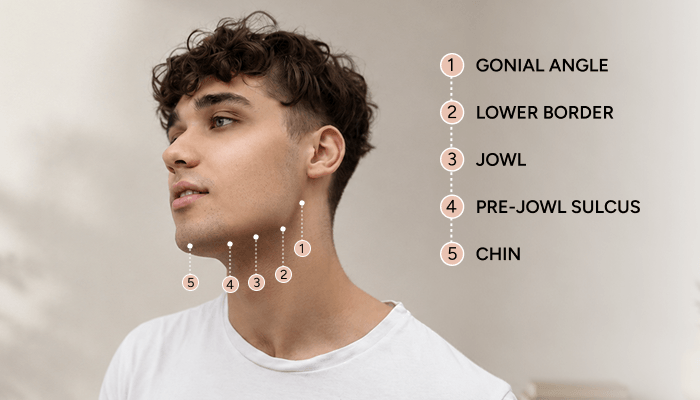
The Gonial Angle
Angelina Jolie rocks a gonial angle of 125 degrees.
On the other hand, Cillian Murphy has a gonial angle of 121 degrees.
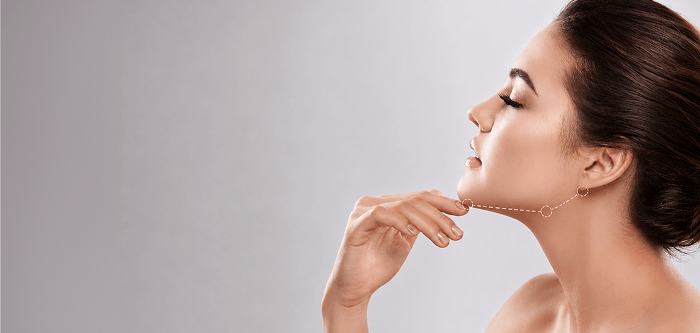
You get the point. It is the geometric angle created by the corner of your jaw. As reflected in the illustration above, the chin (5) is on the x-axis, and the gonial angle (1) is on the y-axis.
This is one of the most important features, also appreciated for facial symmetry in the modeling world today. As you can see, the most conventionally attractive jawlines liked by people fall between 115° and 130°.
- Masculine Gonial Angle: A lower mandibular angle (100° - 120°) creates a more pronounced jawline. Most men have jawlines that naturally tend to grow downward and outward, making this achievable.
- Feminine Gonial Angle: A higher, wider angle (120° - 140°) results in a mostly softer jawline. Although this is not always true for all women. Angelina Jolie’s jawline is iconic for a reason.
If you too are blessed with a boxy jawline, that is great. However, if not, you can work your platysma muscle with the best jawline exercises. This next section is equally beneficial for people who have gained some weight recently. Your jawline is basically hidden underneath your skin. Doing the right kind of neck stretches can bring it out of hiding.
Understanding the Platysma Muscle

The platysma is one of the most superficial muscles in the neck.
These muscles originate in the upper chest and the shoulders. They are a part of the subcutaneous tissue. They ascend all the way up to the face and the lower jowl or mandible. Here’s the good part. The visibility of the jawline depends on these two factors:
- Maintaining Good Posture: Good posture helps to keep your skeleton aligned, including your jaw and neck structure.
- Body Fat percentage: Use an ideal body fat calculator to check your fat percentage. Gaining weight also naturally dulls the appearance of your jawline.
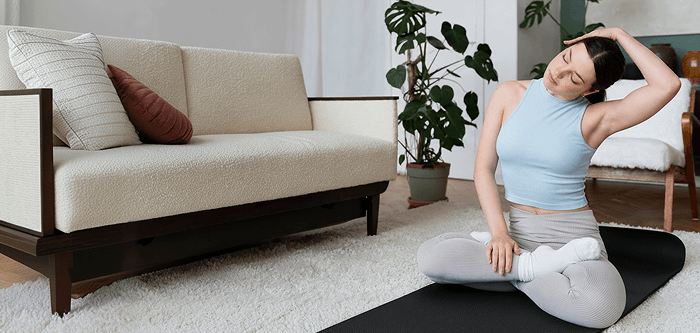
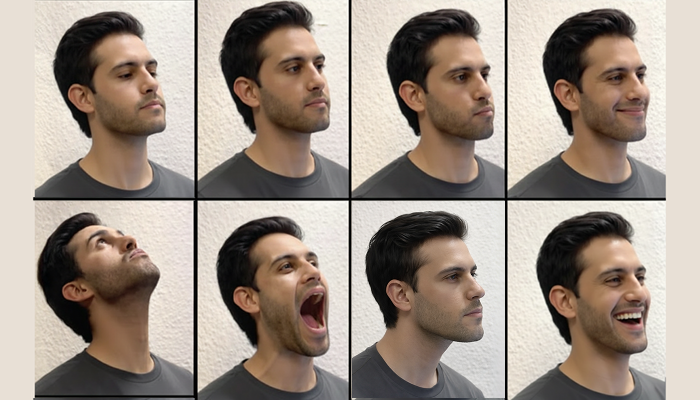
Neck exercises, jawline exercises, and stretching as shown in the image above are some of the best ways to increase the visibility of your jawline. Besides this, it is important to keep your body active because spot reduction in one area is just not possible.
Neck Stretching and Jawline Exercises
|
Jawline Exercises
|
Facts
|
|
Neck Curlup
|
This move can improve neck posture, which may help the jaw area look more defined.
|
|
Vowel Sounds
|
This simple facial exercise can be done anywhere without equipment.
|
|
Collarbone Backup
|
This exercise is often recommended for improving forward-head posture, which can affect jawline appearance.
|
|
Face Yoga
|
Face yoga exercises like chin lifts and smile isolation exercises are often used to help reduce the appearance of a double chin.
|
Neck Curl up
Why do it: Strengthens neck and Platysma muscles
How to do it: The neck curl-up exercise is known to improve neck posture, which can make the jaw area look more defined. To do this neck exercise the right way, lie on your back with your knees bent. Keep your feet flat on the floor. Gently tuck your chin toward your chest, then lift your head slightly off the ground using your neck muscles. You must keep the movement controlled and avoid jerking. Lower slowly, then repeat with steady breathing.
- Reps: 10–15 reps, 2–3 sets.
Vowel Sounds
Why do it: Activates facial muscles for jaw definition.
How to do it: Sit or stand with a straight spine. Open your mouth and exaggerate the sounds of A, E, I, O, and U one by one. Make each vowel big and clear to engage the lips, cheeks, jaw, and neck muscles. Keep the face relaxed between repetitions and breathe normally.
- Reps: 10–15 rounds, 2 sets.
Collarbone Backup
Why do it: Engages neck and chin muscles effectively.
How to do it: Sit or stand tall with your shoulders relaxed. Pull your head straight back as if trying to make a “double chin,” keeping your eyes level. Hold for a second, then return to the starting position. The movement should be backward, not downward, to properly activate the deep neck muscles.
- Reps: 10–15 reps, 2–3 sets.
Face Yoga Exercises
Why do it: Targets the lower face and neck area.
How to do it: Stand or sit upright. Tilt your head back slowly and look toward the ceiling. Push your lower jaw forward slightly and hold the position for a moment. You should feel a stretch under the chin and along the neck. Return to neutral and repeat without straining the neck.
- Reps: 10–12 reps, 2 sets.
|
Interested in fun workouts to keep active?
Pick the activity that excites you and begin your fitness journey today. Explore over 15 workout activities along with many additional benefits, all within one FITPASS plan.
|
Unexercised Jaw, TMJ and Related Issues
When one muscle stops working the right way, other muscles have to compensate for it. This muscle discomfort triggers different symptoms such as muscle strain, stiffness and headaches. Simply chewing food or opening the mouth wide makes the jaw hurt for most people. Or does it make you feel like you are exerting your facial muscles too much? Then it could be that you have TMJ and related issues.
- TMJ Jaw Pain: When the jaw does not get enough exercise, it may become inflamed. Temporomandibular Joint (TMJ) pain occurs in individuals when the muscles connecting their jaw to the skull become inflamed, misaligned or just lose their control. Daily activities like chewing tough food items, biting, speaking and even laughing for longer durations can make your jaw hurt if you have TMJ.
- Morning Aches: A lot of people feel pain just as they wake up in the morning. Their jaw and temples feel stiff and tight. This is a key symptom of jaw muscle weakness. Practice morning neck stretches and jawline exercises to chisel your mandibular angle.
- Headaches: Headaches can be a subsequent reason for the TMJ pain issues. If you experience jaw clicking, popping, or stiffness, your headaches may be arising due to TMJ issues. Feeling jaw pain while chewing food
- Venus Rings: Horizontal necklines are often linked to hydration loss and reduced skin density. However, more often than not, they are a sign of sedentary neck and jaw muscles leading to an unexercised jaw.
Key Takeaways
These exercises may help improve posture, muscle tone, and facial awareness, but they will not dramatically reshape bone structure. Experts recommend pairing them with good posture, hydration, sleep, and overall body-fat management. Are you ready to sculpt your jawline? Focus on face yoga exercises, dynamic vinyasa yoga, Iyengar yoga, and meditative yin yoga.
Experience the benefits of face yoga in the best yoga classes in your area with FITPASS.