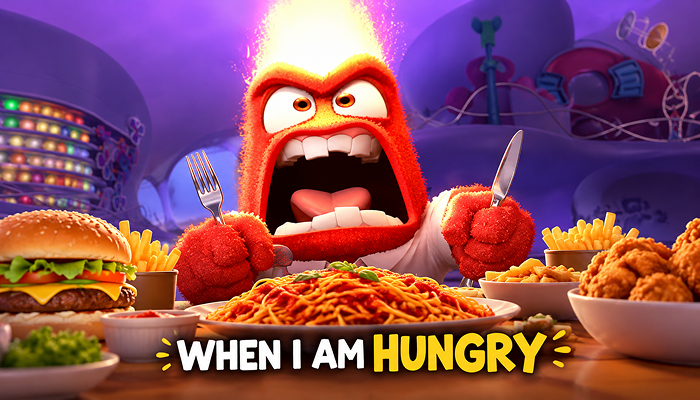
Why go meet Anger from Inside Out at a Disney park when you can experience him now? Satiety is the feeling of fullness after a meal. Something people struggle to maintain at times. This blog shares the inside scoop from certified dietitians on the hunger hormone that makes you go hangry: Ghrelin. It is responsible for emotional eating and messing up workout schedules.
This 7-minute read best benefits the people who:
- get hungry a lot
- experience energy crashes
- strong cravings
If you are someone who gets hungry a lot, experiences energy crashes and strong cravings, FITPASS dietitians may help you regulate this hunger hormone.
The Dietitians’ Scoop on Hunger Hormones
“Hunger ko sirf willpower ka issue samajhna galat hai. Managing hunger hormones through diet starts with eating for fullness. Satiety, you know. Ghrelin is the hunger hormone. It rises when you need food. That’s when you get hangry. And, leptin helps signal fullness over time. But hunger is not only a hormonal phenomenon. Emotional eating, stress, poor sleep and random meal timings can also make you crave food. Reality me apki body ko jo chahiye vo hota hai proper rest or comfort. That is why as a dietitian, I do not make meal plans based on calories alone. BMI is one starting point.
FITPASS dietitians also check your unique hunger patterns, lifestyle, workout activities, workout duration, and food preferences. Agar aapko roti-sabzi, poha ya idli-sambar pasand hai, toh plan mein wahi foods smartly include honge. Satiety index bhi help karta hai because foods with protein, fibre and volume keep you full for longer. The goal is simple: less restriction, better fullness and smarter choices.
— Lead Dietitian at FITPASS
Potatoes and Everything Good on the Satiety Index
Boiled potatoes or mashed potatoes?
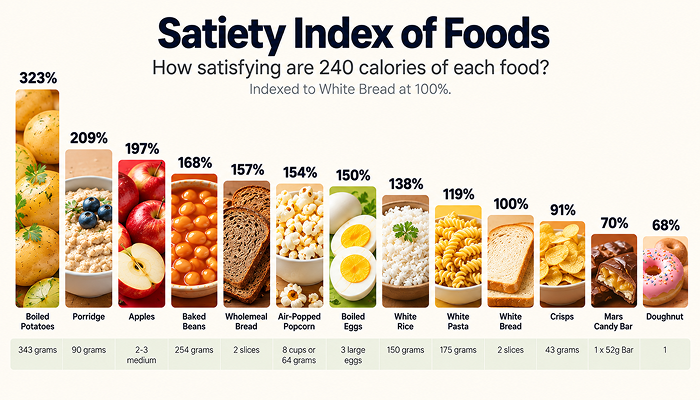
Too bad if you said no to both. Potatoes top the charts for the satiety index chart. Ever wondered why some foods leave you satisfied while others make you reach for a snack? The satiety index compares how filling foods are when each serving provides the same number of calories. White bread is the baseline at 100%.
Equal calories don’t always mean equal fullness. Boiled potatoes score 323% on the satiety index chart. At the same time, doughnuts sit much lower at 68%. There are certain foods that fill you and keep you energised for longer. Including these foods in your diet keeps you satiated.
Satiety Index Chart
Think of the chart as a guide to filling choices, not a list of “good” and “bad” foods.
Here is a list of foods that are ranked the highest in the satiety index:
|
Food Options
|
Satiety Index score
|
Serving Size
|
|
Boiled potatoes
|
323%
|
2–3 small boiled potatoes with lemon, chaat masala, and curd
|
|
Oats porridge
|
209%
|
1 bowl savoury oats with vegetables
|
|
Apple
|
197%
|
1 medium apple with roasted chana
|
|
Rajma or baked beans
|
168%
|
1 katori rajma or chole with salad
|
|
Whole-wheat roti
|
157%
|
2 rotis with dal and sabzi
|
|
Popcorn or roasted makhana
|
154%
|
2–3 cups of popcorn or lightly roasted makhanas, a superfood
|
|
Boiled eggs
|
150%
|
2–3 eggs with cucumber and tomato
|
|
Moong dal khichdi
|
138%
|
1 bowl khichdi with vegetables and curd or dal-chawal
|
|
Plain rice
|
138%
|
1 small katori rice with dal and sabzi
|
|
White bread
|
100%
|
2 slices of bread or a small pav serving
|
Ghrelin: Much More than a Hunger Hormone

Ghrelin is secreated by X/A-like cells located in the fundus of the stomach. Other parts of the body that produce ghrelin are the small intestine, pancreas, kidney, placenta, and even the brain. Now, if you think about how to control ghrelin hormone, limit your calories. However, it is also important to ensure that you get enough protein and fibre that keep you full.
What is Ghrelin: The Hunger Gremlin
Ghrelin is a peptide hormone that stimulates hunger. Now you are probably thinking about how to control ghrelin hormone. Here’s how ghrelin the hunger hormone gremlin, affects your fitness progression.
- Empty stomach: An empty stomach for a few hours is harmless. Dietitians actually encourage healthy gaps between meals. But ghrelin is released when appetite regulation is already neglected.
- Ghrelin unleashed: Let’s say you have been skipping meals, following a calorie-restrictive diet, or not getting restorative sleep.
- The act of ingestion: Eventually, the food delivery apps on your phone become the final resort. Ghrelin makes you choose high-calorie foods and fatty foods.
- The final blow: How the body processes this meal hits both your diet and your fitness progression. Some people gain weight. Others experience aftereffects that linger for a few days in the form of cortisol.
Wondering what happens when ghrelin levels are too high?
Your body (regardless of your fitness level) experiences persistent hunger and intense food cravings, including high-calorie, sugary, or fatty foods. Check out this guide on using a TDEE calculator for safe weight loss if you are having trouble with appetite regulation.
|
Take Your Health Risk Assessment
FITFEAST offers an HRA (Health Risk Assessment) that records how your body reacts to certain meals, your eating habits, food intolerances, BMI, daily physical activity goals, fitness progression, food preferences, and much more.
Fill out your HRA form and speak to a personal dietitian today.
Download the FITPASS app today.
|
Leptin: The Good Satiety Hormone
Ghrelin is the “go” hormone that tells you to eat.
Leptin, on the other hand, is the “stop” hormone. Leptin is produced by fat cells, signalling fullness. Let’s take a look at how leptin affects your body. This reduces appetite and hunger cravings. FITPASS dietitians recommend the following steps on how to reduce the ghrelin hormone and boost leptin, the satiety hormone.
|
Managing the hunger hormones ghrelin and leptin
|
How it helps
|
|
High-protein foods
|
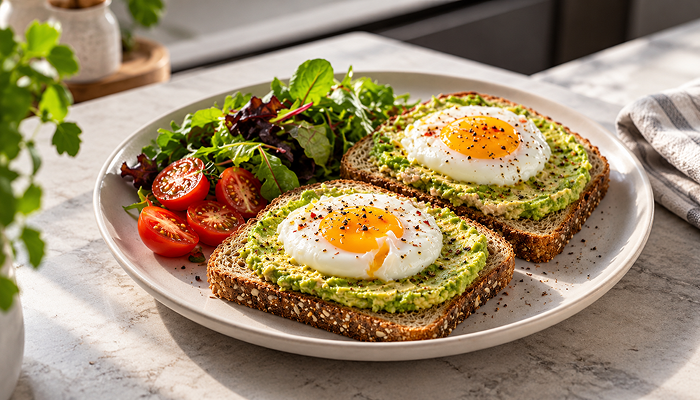
Avocado toast with eggs provides protein and satiety to support appetite regulation. Avocado and whole-grain toast add healthy fats and fibre.
|
|
High-fibre foods
|
Oats, fruits, vegetables, legumes, and whole grains slow digestion and help manage hunger.
|
|
Adequate sleep
|
Getting around 7–9 hours of sleep may help prevent hunger-related changes caused by sleep deprivation.
|
|
Regular exercise
|
Cardio, strength training, swimming, and other activities may support appetite regulation.
|
|
Stress management
|
Yoga, meditation, deep breathing, and relaxation techniques may help manage stress-related hunger.
|
Together, these actions reduce the ghrelin hormone to promote fullness and slow digestion. All of these help reduce hunger signals linked to ghrelin.
Personalised Diet for Satiety and Appetite Regulation
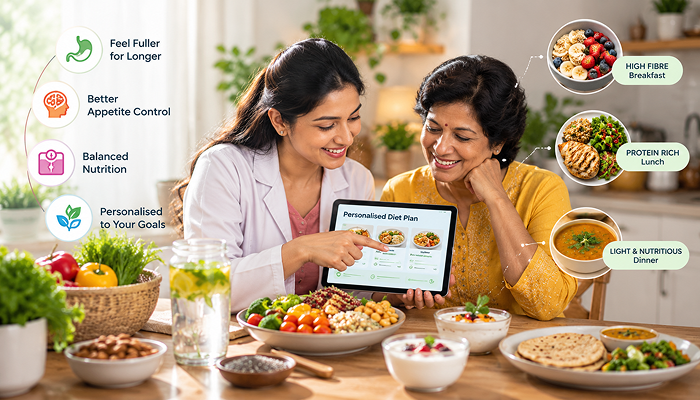
Your diet must evolve not just for nutrition but also for satiety and appetite regulation.
Step 1: Choose the FITPASS 360 plan that best supports your needs.
Step 2: Fill in the HRA (Health Risk Assessment) in the FITPASS app.
Step 3: Connect with your nutritionist via the app to get a personalised meal plan.
As your fitness level inevitably improves, FITPASS nutritionists strategically tweak your diet to keep you full for longer. A registered dietitian closely monitors your physical progress with meal logs.
Because appetite regulation is for EVERYONE.
It’s time to raise the bar (and your spoon) with personalised meal plans designed to help you avoid energy crashes and keep you full.