Ideal Weight Calculator
Use our Ideal Body Weight Calculator to estimate your healthy weight based on height and gender.
IDEAL WEIGHT CALCULATOR
What is Ideal Body Weight (IBW)?
Ideal body weight (IBW) is a number that tells you how much a person of your height and gender should ideally weigh, according to medical research. It is not a beauty standard or a fitness goal. It is a clinical tool that doctors, pharmacists, and dietitians use to make better health decisions for their patients.
It is commonly used as a starting point for setting weight-loss goals, planning healthy weight gain, and understanding whether your current weight falls within a recommended range for your height.
IBW is not one fixed number. Different medical experts have developed different formulas over the years, and each formula gives a slightly different result. That is why this calculator shows you five results at once, so you can see the full picture instead of relying on just one method.
Note: The word "ideal" here is a medical term, not a comment on your body. It simply refers to a weight range that research links to better health outcomes for your height. It is not a target you are expected to match.
Why Knowing Your Ideal Body Weight Can Be Useful
Ideal Body Weight (IBW) is more than just a fitness metric. It is a medical reference value that has been used for decades in healthcare, nutrition, and clinical settings. While it does not define overall health, it helps professionals make decisions related to treatment, nutrition planning, and patient care.
Here are some of the most common ways IBW is used:
Medicine Dosing
Certain medications are prescribed using Ideal Body Weight rather than actual body weight. This helps healthcare providers calculate appropriate doses and reduces the risk of underdosing or overdosing, particularly in individuals who are significantly overweight.
Ventilator Support
In intensive care units (ICUs), breathing machine settings are often based on Ideal Body Weight. This is because lung size is more closely related to height than total body weight, making IBW a useful reference for ventilator management.
Diet and Nutrition Planning
Dietitians and nutrition professionals may use IBW as a starting point when estimating calorie, protein, and nutrient requirements. It can help establish nutritional goals for weight management, recovery, and overall health.
Health Assessments
During routine health check-ups, medical screenings, and wellness evaluations, Ideal Body Weight may be used alongside BMI and other measurements to assess whether a person's weight falls within a recommended range for their height.
Weight Management Goals
Many people use IBW as a reference when setting realistic weight-loss or weight-gain targets. Rather than focusing on arbitrary numbers, it provides a height-based benchmark that can support long-term health and fitness planning.
Who Should Use This Calculator?
This Ideal Body Weight Calculator is intended for adults who want to estimate a healthy weight based on height using established medical formulas.
| Recommended For | How It Helps |
|---|---|
| Adults looking to find their ideal weight by height | Provides five medically recognized ideal body weight estimates based on height and sex. |
| People managing their weight for health reasons | Offers a reference point that can support weight-loss, weight-gain, or weight-maintenance goals. |
| Medical and nursing students | Allows quick comparison of Devine, Robinson, Miller, Hamwi, and BMI-Based formulas without manual calculations. |
| Doctors, dietitians, and healthcare professionals | Useful as a quick reference tool when discussing weight-related assessments and nutritional planning. |
| Fitness trainers and nutrition coaches | Can be used alongside BMI, body fat percentage, and body composition measurements when setting realistic client goals. |
This Calculator May Not Be Suitable For
| Group | Why |
|---|---|
| Children and adolescents | These formulas were developed for adults and do not account for growth and development. |
| Pregnant women | Weight recommendations during pregnancy follow different medical guidelines. |
| Highly muscular athletes | Increased muscle mass may result in healthy weights that exceed standard IBW estimates. |
| Older adults | Age-related changes in body composition can affect how accurately IBW reflects healthy weight status. |
Important: This calculator provides reference values based on established ideal body weight formulas. Results should not be considered medical advice or a diagnosis. For personalized guidance, consult a qualified doctor or registered dietitian.
How It Works
Unlike calculators that provide a single ideal weight estimate, this calculator compares five widely used methods. Each formula was developed using different research populations and assumptions, which is why your results may vary from one method to another.
All formula results are displayed separately in the results panel, allowing you to compare how different clinical frameworks estimate your ideal body weight.
Formulas Used in This Calculator
| Formula | Year Introduced | Male Formula (kg) | Female Formula (kg) |
|---|---|---|---|
| Devine | 1974 | 50 + 2.3 × (height in inches above 60) | 45.5 + 2.3 × (height in inches above 60) |
| Robinson | 1983 | 52 + 1.9 × (height in inches above 60) | 49 + 1.7 × (height in inches above 60) |
| Miller | 1983 | 56.2 + 1.41 × (height in inches above 60) | 53.1 + 1.36 × (height in inches above 60) |
| Hamwi | 1964 | 48 + 2.7 × (height in inches above 60) | 45.5 + 2.2 × (height in inches above 60) |
| Peterson | 2016 | Target BMI × (2.2 + 3.5 × (height (m) − 1.5)) | Target BMI × (2.2 + 3.5 × (height (m) − 1.5)) |
| BMI-Based | Modern | Target BMI × Height² | Target BMI × Height² |
Formula Validity
The Devine, Robinson, Miller, and Hamwi formulas were originally developed using populations with a height of at least 5 feet (152 cm).
| Height | Formula Availability |
|---|---|
| 152 cm and above | All five formulas are calculated |
| Below 152 cm | Devine, Robinson, Miller, and Hamwi display "N/A" |
| Any height | BMI-Based formula remains available |
Hamwi Body Frame Adjustment
The Hamwi formula is the only method in this calculator that can be adjusted based on body frame size.
| Body Frame | Adjustment Applied |
|---|---|
| Small Frame | −10% |
| Medium Frame | No adjustment |
| Large Frame | +10% |
The adjustment is applied after the standard Hamwi calculation:
| Frame Size | Calculation |
|---|---|
| Small | Hamwi Base × 0.90 |
| Medium | Hamwi Base × 1.00 |
| Large | Hamwi Base × 1.10 |
Why Are There Multiple Results?
There is no single universally accepted ideal body weight formula. Healthcare professionals, researchers, and nutrition experts may prefer different methods depending on the situation.
Displaying all five formulas allows you to compare estimates and understand the range of weights that various clinical approaches consider appropriate for your height.
Factors That Determine Your Ideal Weight
There’s no single “perfect number” when it comes to weight. Your ideal body weight varies from person to person. Four main factors help determine where you should aim to be:
Age
As we age, our bodies naturally change. Younger people usually carry more lean muscle, while older adults may lose muscle and gain fat more easily. That means a healthy weight at 25 may not look the same as at 55. Adjusting for age ensures your weight goals are realistic and sustainable.
Gender
- Men usually have 4–5 kg higher IBW for the same height due to more muscle (≈40% of body weight) and bone mass.
- Women carry more essential fat (10–13%) for hormonal and reproductive health, which widens their healthy range. Post-menopause, women’s weight patterns shift closer to men’s.
Height
Height is one of the biggest factors in determining weight. Taller people have longer bones and larger frames, so they naturally weigh more.
Body Frame Size
Not everyone of the same height and gender has the same build. Your body frame size (small, medium, or large) can shift your ideal weight up or down.
For Women
- Small frame: Wrist under 5.5 inches
- Medium frame: 5.5 – 5.75 inches
- Large frame: Over 5.75 inches
For Men
- Small frame: Wrist under 6.5 inches
- Medium frame: 6.5 – 7.5 inches
- Large frame: Over 7.5 inches
This simple wrist measurement helps fine-tune your results. Two people of the same height can have very different healthy weight ranges depending on whether their frame is naturally smaller or broader.
Understanding Your Ideal Body Weight Results
Once you enter your height, sex, and body frame, the calculator returns five results at once. Each result comes from a different formula: Devine, Robinson, Miller, Hamwi, and BMI-Based. These five formulas were developed by different medical researchers across different decades, and each one uses a slightly different calculation method. That is why the numbers you see will not all be the same.
Rather than picking one result and treating it as the only correct answer, read all five together. The spread of numbers you see represents your clinical ideal body weight range. This range is a more honest and useful picture of where your weight stands than any single formula can give you.
How to Read Your Results
Your results will fall into one of five common scenarios. Use the table below to understand what your result means for your health and next step
| Result Scenario | What It Means | What You Can Do |
|---|---|---|
| Your current weight is close to most formula results | Your weight is broadly in line with the ideal body weight range calculated for your height and sex. | Maintain your current weight with a balanced diet and regular physical activity. |
| Your weight is below most formula results | Your weight is lower than what these formulas suggest for your height. This does not automatically mean something is wrong, but it is worth paying attention to. | Consider speaking with a dietitian about healthy weight gain and adequate nutrition, especially if you feel fatigued or unwell. |
| Your weight is above most formula results | Your weight exceeds the range suggested by these formulas for your height and sex. | Use these results as a reference when setting realistic weight management goals, and discuss them with your doctor or dietitian. |
| Your weight falls between the lowest and highest formula results | This is the most common scenario. It simply means your weight sits within the range that different clinical methods produce. | No action is needed based on this alone. Keep monitoring your overall health with regular check-ups. |
| The five formula results vary noticeably | Each formula was built using a different dataset and a different methodology. A spread of results is expected and normal. | Focus on the middle of the range rather than the highest or lowest single result. |
Which Formula Result Should You Follow?
There is no single ideal body weight formula that works best for every person. Different healthcare professionals use different formulas depending on what they are assessing. A pharmacist calculating an antibiotic dose may rely on the Devine formula. A dietitian planning a nutrition programme may refer to the Hamwi or BMI-based result. A general physician may look at all of them together.
For most people reading this page, the most practical approach is to look at where your current weight sits relative to all five results together. If your weight falls near the middle of the range, it is generally close to what multiple clinical methods agree on.
What Is a Healthy Target Weight?
A healthy target weight is not a single exact number. For most adults, it is a range. The five formulas in this calculator give you a practical way to define that range based on your height and sex, without relying on population averages that may not reflect your body.
Whether your goal is weight loss, weight gain, or simply maintaining where you are, the range produced by these five formulas gives you a clinically grounded starting point for that conversation with your doctor or dietitian.
| Weight Loss Goal | Weight Maintenance Goal | Weight Gain Goal |
|---|---|---|
| Use the lower end of your IBW range as an initial target. Aim for gradual, sustainable reduction of 0.5 to 1 kg per week. | If your weight is already within or near the IBW range, focus on staying consistent with your current diet and activity routine. | Use the upper end of your IBW range as a reference. Prioritise nutrient-dense foods and consult a dietitian for a structured plan. |
What Ideal Body Weight Does Not Tell You
Ideal body weight formulas only use height and sex as inputs. They do not account for several factors that have a meaningful effect on what a healthy weight looks like for a specific person.
- Muscle mass: People who exercise regularly or lift weights carry more muscle, which adds to total body weight without adding body fat. IBW formulas cannot distinguish between muscle and fat.
- Age: As people age, body composition changes. Adults above 65 may have a higher IBW result that does not reflect their actual health needs.
- Bone density: Body frame size and bone density vary between individuals and ethnic groups.
- Health conditions: Conditions such as fluid retention, hormonal disorders, or thyroid issues can affect body weight.
- Children and pregnant women: These formulas were not designed for children, adolescents, or pregnant women.
Remember: These results are a clinical reference, not a diagnosis. If you have specific concerns about your weight or health, please speak with a qualified doctor or registered dietitian who can assess your individual situation properly.
IBW Charts
Wondering what your ideal weight should be for your height? The tables below provide ideal body weight estimates for men and women using the same formulas available in this calculator.
Because there is no single universally accepted ideal body weight formula, the chart includes results from Devine, Robinson, Miller, Hamwi, and BMI-Based calculations. Comparing multiple methods provides a broader view of the weight range commonly recommended for your height.
Use these values as reference points rather than strict targets. Individual factors such as body composition, muscle mass, frame size, age, and activity level can influence what a healthy weight looks like for you.
IBW Chart for Indian Men (Height & Weight Table)
The table below shows ideal body weight estimates for men using the same formulas available in this calculator. The BMI-Based column uses a target BMI of 21.
| Height | Devine | Robinson | Miller | Hamwi* | Peterson | BMI-Based (BMI 21) |
|---|---|---|---|---|---|---|
| 4'11" (150 cm) | N/A | N/A | N/A | N/A | 46.2 kg | 47.3 kg |
| 5'0" (152 cm) | N/A | N/A | N/A | N/A | 47.7 kg | 48.5 kg |
| 5'1" (155 cm) | 52.7 kg | 54.3 kg | 58.0 kg | 51.2 kg | 49.9 kg | 50.5 kg |
| 5'2" (157 cm) | 55.0 kg | 56.2 kg | 59.5 kg | 53.5 kg | 51.3 kg | 51.8 kg |
| 5'3" (160 cm) | 57.2 kg | 58.0 kg | 61.0 kg | 56.5 kg | 53.6 kg | 53.8 kg |
| 5'4" (163 cm) | 59.5 kg | 59.9 kg | 62.5 kg | 59.1 kg | 55.8 kg | 55.9 kg |
| 5'5" (165 cm) | 61.8 kg | 61.8 kg | 64.0 kg | 61.8 kg | 57.2 kg | 57.2 kg |
| 5'6" (168 cm) | 64.0 kg | 63.6 kg | 65.4 kg | 64.4 kg | 59.4 kg | 59.3 kg |
| 5'7" (170 cm) | 66.3 kg | 65.5 kg | 66.9 kg | 67.1 kg | 60.9 kg | 60.7 kg |
| 5'8" (173 cm) | 68.6 kg | 67.4 kg | 68.4 kg | 69.8 kg | 63.1 kg | 62.9 kg |
| 5'9" (175 cm) | 70.9 kg | 69.3 kg | 69.9 kg | 72.5 kg | 64.6 kg | 64.3 kg |
| 5'10" (178 cm) | 73.1 kg | 71.1 kg | 71.4 kg | 75.2 kg | 66.8 kg | 66.5 kg |
| 5'11" (180 cm) | 75.4 kg | 73.0 kg | 72.9 kg | 77.8 kg | 68.3 kg | 68.0 kg |
| 6'0" (183 cm) | 77.7 kg | 74.9 kg | 74.3 kg | 80.5 kg | 70.5 kg | 70.3 kg |
| 6'1" (185 cm) | 80.0 kg | 76.8 kg | 75.8 kg | 83.1 kg | 71.9 kg | 71.9 kg |
| 6'2" (188 cm) | 82.2 kg | 78.6 kg | 77.3 kg | 85.8 kg | 74.1 kg | 74.2 kg |
| 6'3" (190 cm) | 84.5 kg | 80.5 kg | 78.8 kg | 88.5 kg | 75.6 kg | 75.8 kg |
* Hamwi values assume a medium body frame. Small-frame results are approximately 10% lower, while large-frame results are approximately 10% higher.
Note: The Devine, Robinson, Miller, and Hamwi formulas were originally developed for adults with a height of at least 152 cm (5 feet). For heights below 152 cm, these formulas are shown as N/A, while the BMI-Based method remains valid.
IBW Chart for Indian Women
The table below shows ideal body weight estimates for women using the same formulas available in this calculator. The BMI-Based column uses a target BMI of 21.
| Height | Devine | Robinson | Miller | Hamwi* | Peterson | BMI-Based (BMI 21) |
|---|---|---|---|---|---|---|
| 4'11" (150 cm) | N/A | N/A | N/A | N/A | 46.2 kg | 47.3 kg |
| 5'0" (152 cm) | N/A | N/A | N/A | N/A | 47.7 kg | 48.5 kg |
| 5'1" (155 cm) | 48.2 kg | 51.3 kg | 55.0 kg | 47.2 kg | 49.9 kg | 50.5 kg |
| 5'2" (157 cm) | 50.5 kg | 53.1 kg | 56.5 kg | 49.4 kg | 51.3 kg | 51.8 kg |
| 5'3" (160 cm) | 52.7 kg | 54.9 kg | 57.9 kg | 51.5 kg | 53.6 kg | 53.8 kg |
| 5'4" (163 cm) | 55.0 kg | 56.8 kg | 59.4 kg | 53.7 kg | 55.8 kg | 55.9 kg |
| 5'5" (165 cm) | 57.3 kg | 58.7 kg | 60.9 kg | 55.8 kg | 57.2 kg | 57.2 kg |
| 5'6" (168 cm) | 59.5 kg | 60.5 kg | 62.4 kg | 58.0 kg | 59.4 kg | 59.3 kg |
| 5'7" (170 cm) | 61.8 kg | 62.4 kg | 63.9 kg | 60.2 kg | 60.9 kg | 60.7 kg |
| 5'8" (173 cm) | 64.1 kg | 64.3 kg | 65.4 kg | 62.3 kg | 63.1 kg | 62.9 kg |
| 5'9" (175 cm) | 66.4 kg | 66.2 kg | 66.8 kg | 64.5 kg | 64.6 kg | 64.3 kg |
| 5'10" (178 cm) | 68.6 kg | 68.0 kg | 68.3 kg | 66.7 kg | 66.8 kg | 66.5 kg |
| 5'11" (180 cm) | 70.9 kg | 69.9 kg | 69.8 kg | 68.8 kg | 68.3 kg | 68.0 kg |
| 6'0" (183 cm) | 73.2 kg | 71.8 kg | 71.3 kg | 71.0 kg | 70.5 kg | 70.3 kg |
| 6'1" (185 cm) | 75.5 kg | 73.7 kg | 72.8 kg | 73.2 kg | 71.9 kg | 71.9 kg |
| 6'2" (188 cm) | 77.7 kg | 75.5 kg | 74.2 kg | 75.3 kg | 74.1 kg | 74.2 kg |
| 6'3" (190 cm) | 80.0 kg | 77.4 kg | 75.7 kg | 77.5 kg | 75.6 kg | 75.8 kg |
* Hamwi values assume a medium body frame. Small-frame results are approximately 10% lower, while large-frame results are approximately 10% higher.
Note: The Devine, Robinson, Miller, and Hamwi formulas were developed for adults with a height of at least 152 cm (5 feet). For heights below 152 cm, these formulas are displayed as N/A. The BMI-Based method remains valid at any adult height.
Limitations of Ideal Body Weight Calculations
Ideal Body Weight (IBW) formulas provide useful reference values, but they are not designed to measure overall health. The Devine, Robinson, Miller, Hamwi, and BMI-Based methods estimate weight primarily from height and sex, which means they cannot account for every factor that influences a healthy body weight.
What IBW Formulas Do Not Consider
| Factor | Why It Matters |
|---|---|
| Body Fat Percentage | Two people can weigh the same but have very different body fat levels. |
| Muscle Mass | Athletes and strength-trained individuals often weigh more than standard IBW estimates due to increased muscle mass. |
| Body Frame Size | Only the Hamwi formula includes a frame-size adjustment. Other formulas do not account for differences in bone structure. |
| Age | Body composition changes naturally with age, but most IBW formulas do not adjust for this. |
| Fitness Level | Active individuals may have healthy weights that fall outside standard IBW estimates. |
| Medical Conditions | Certain health conditions can affect body weight and body composition. |
How Should You Use Your Results?
The most effective way to use IBW is as a reference point rather than a strict target. Your results can help you understand how your current weight compares with commonly used medical formulas, but they should be interpreted alongside other health measurements such as BMI, body fat percentage, waist-to-height ratio, and overall lifestyle factors.
Important: This calculator provides informational estimates only and should not be used as a substitute for professional medical advice, diagnosis, or treatment.
Why Choose FITPASS
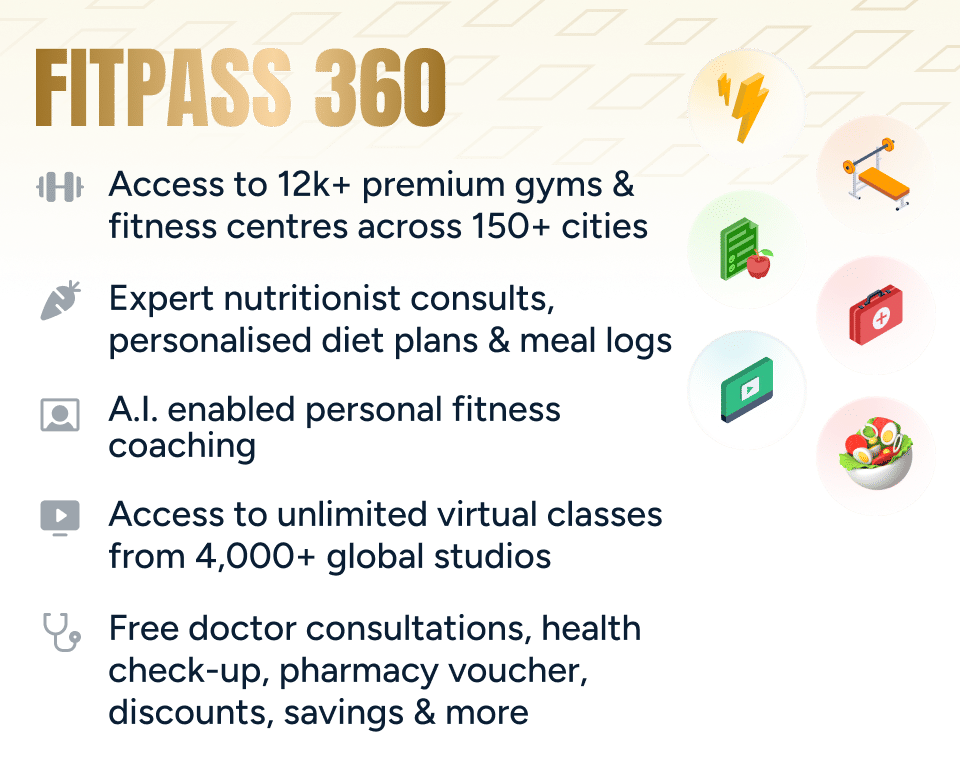
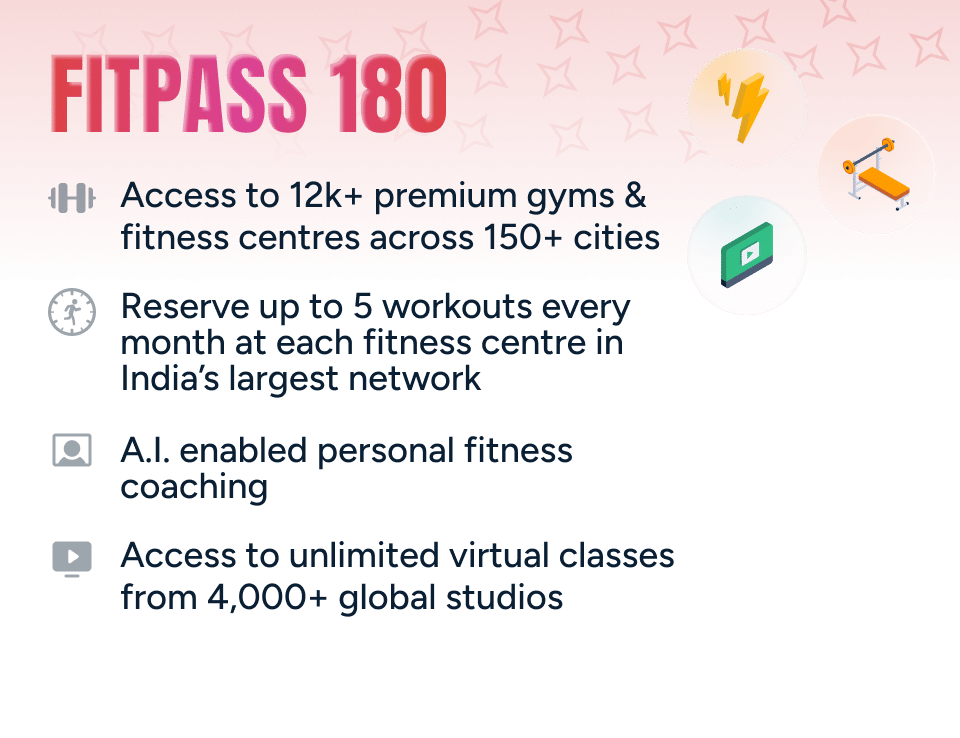
FITPASS gives you gym access, AI personal training, home workouts, nutrition support and health services in one membership





Put Your Health Insights Into Action
Achieve your goals with one fitness membership.